Wheelchair Accessible Venice: A Step-Free Guide to the Floating City
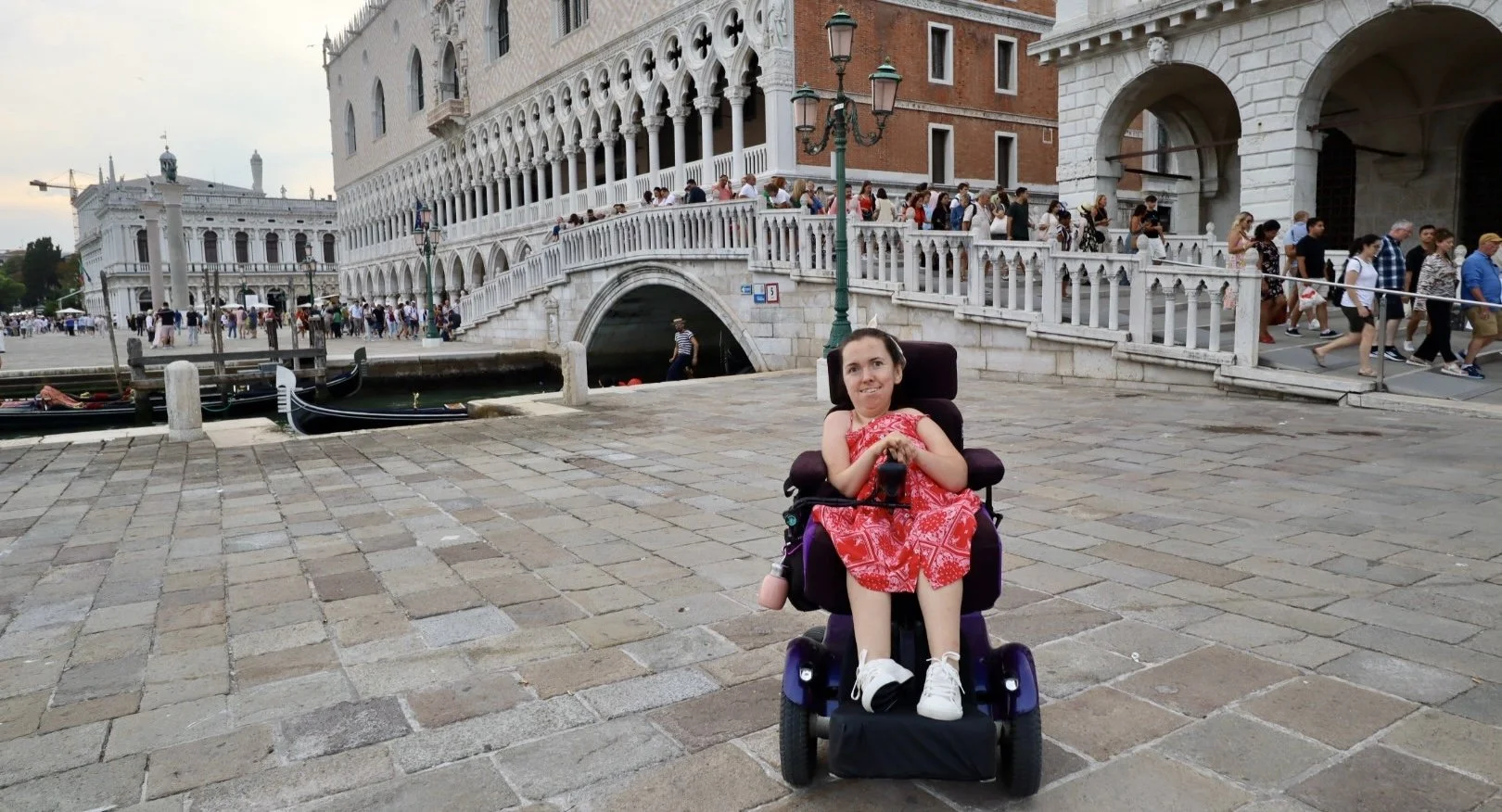
A Wheelchair Users Guide to Exploring the City – Including downloadable “Accessible Venice” Map!
Venice, otherwise known as The Floating City, has a reputation for being inaccessible. Its ancient architecture, and network of canals and historic bridges make it a mission to navigate in a wheelchair. However, from our experience it’s not mission-impossible. In fact, with a bit of planning, Venice can be perfectly manageable in a wheelchair — and extremely rewarding!
It’s one of the most beautiful and fascinating places we’ve ever visited — a real bucket-list destination. Here’s how we did it…
Where to Stay
Campsites Near Venice
If you travel by caravan, motorhome or tent, you (unsurprisingly) won’t find a campsite in the city. After all, Venice is built on a group of islands, with waterways for roads. There is, however, a huge selection to choose from in the surrounding area.
We towed our adapted touring caravan all the way from our home on the south coast of England, taking the scenic route through France and Italy, before settling on the Cavallino-Treporti Peninsula on the outskirts of the Venetian Lagoon. The peninsula alone has more than 30 campsites to choose from, but we’d highly recommend the site we stayed on, Camping Ca’ Savio, bookable via The Caravan and Motorhome Club.
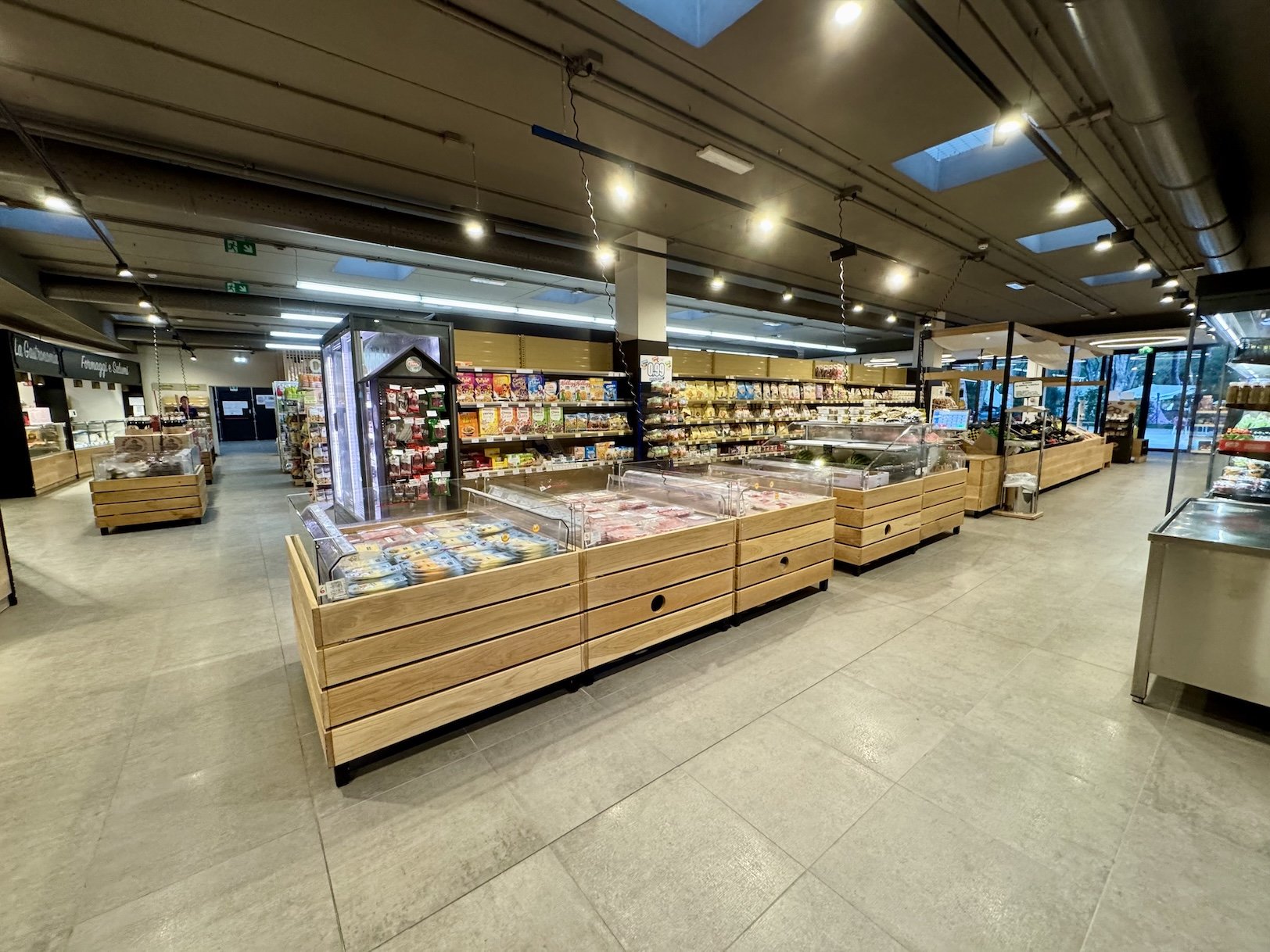
Sandwiched between the lagoon and the Adriatic Sea, with direct access onto a sprawling Blue Flag beach and a short boat ride to Venice, it was the campsite’s location that drew us there… but its welcoming staff, relaxed atmosphere and plethora of facilities made it difficult to leave! Not only did they have multiple swimming pools and eateries, entertainment for all ages and a full-sized supermarket, but they have spacious, wooded pitches, and a large nature-garden for wildlife too.
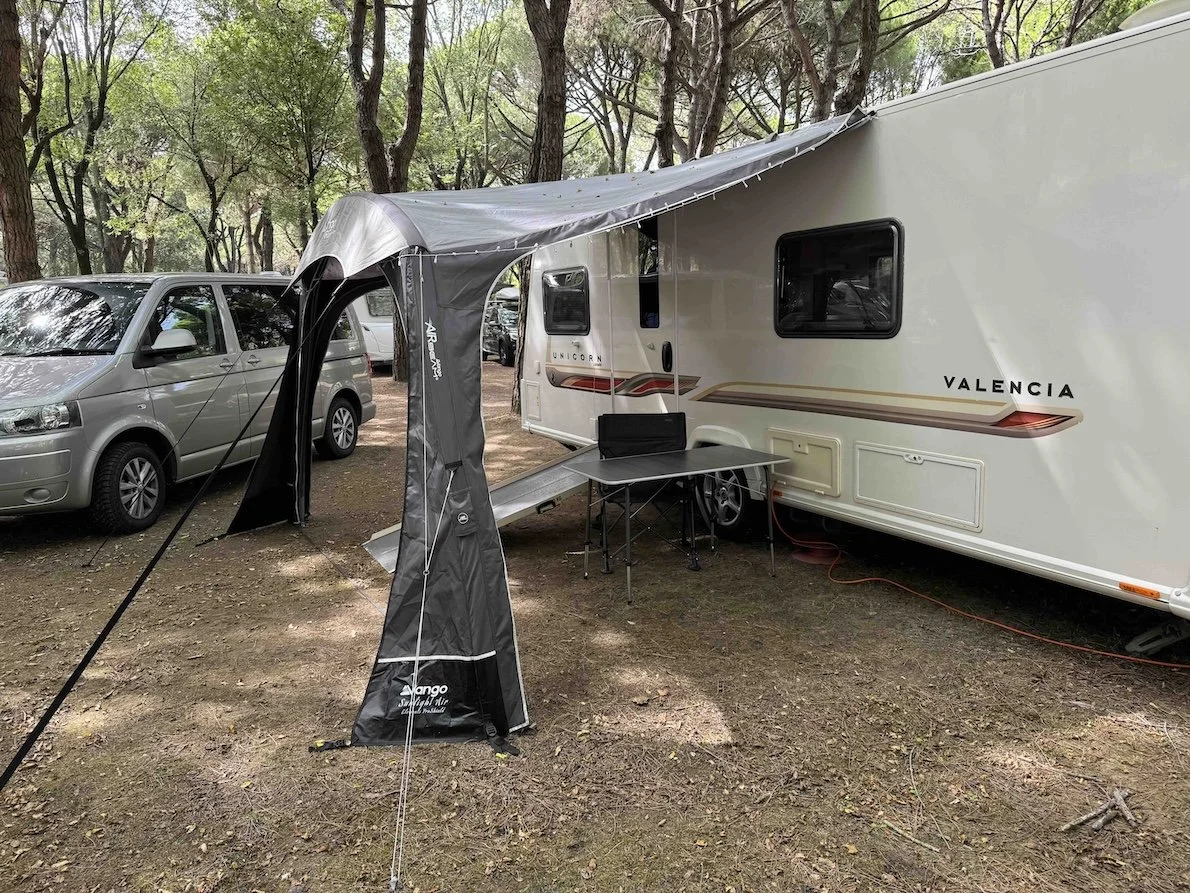
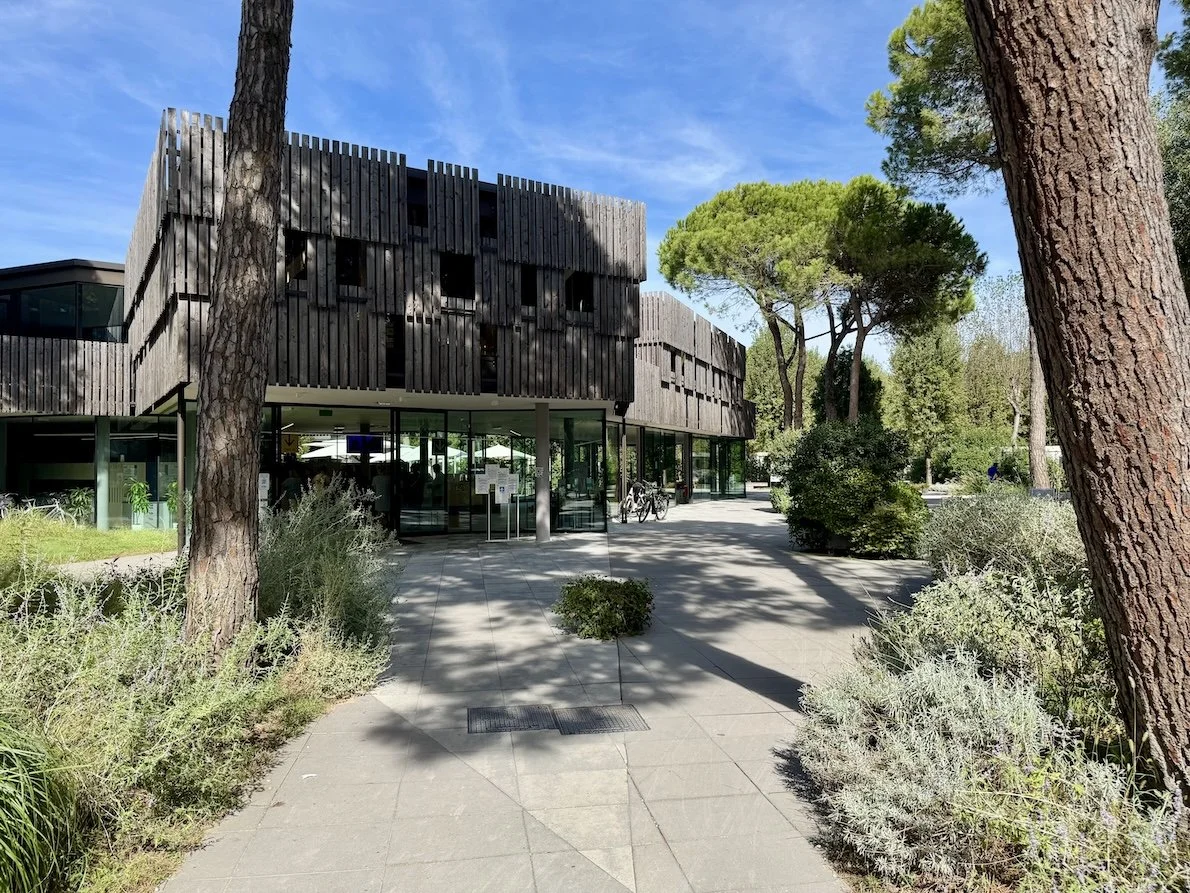
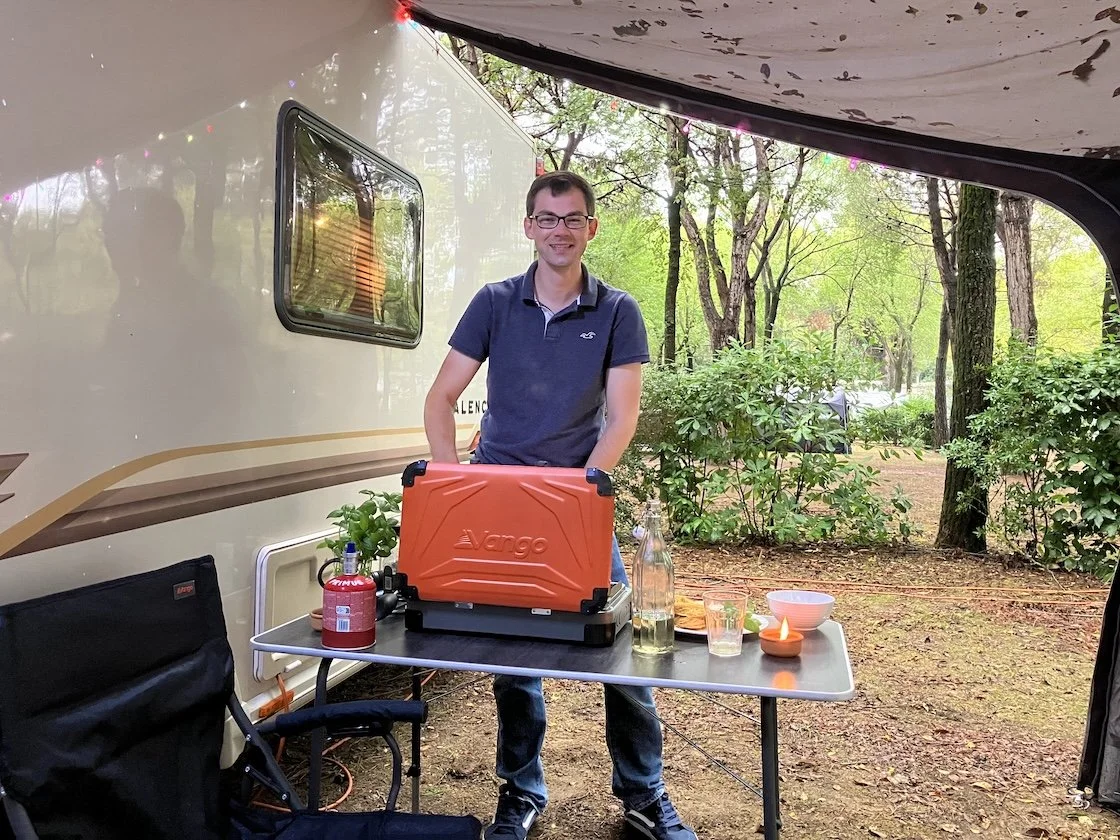
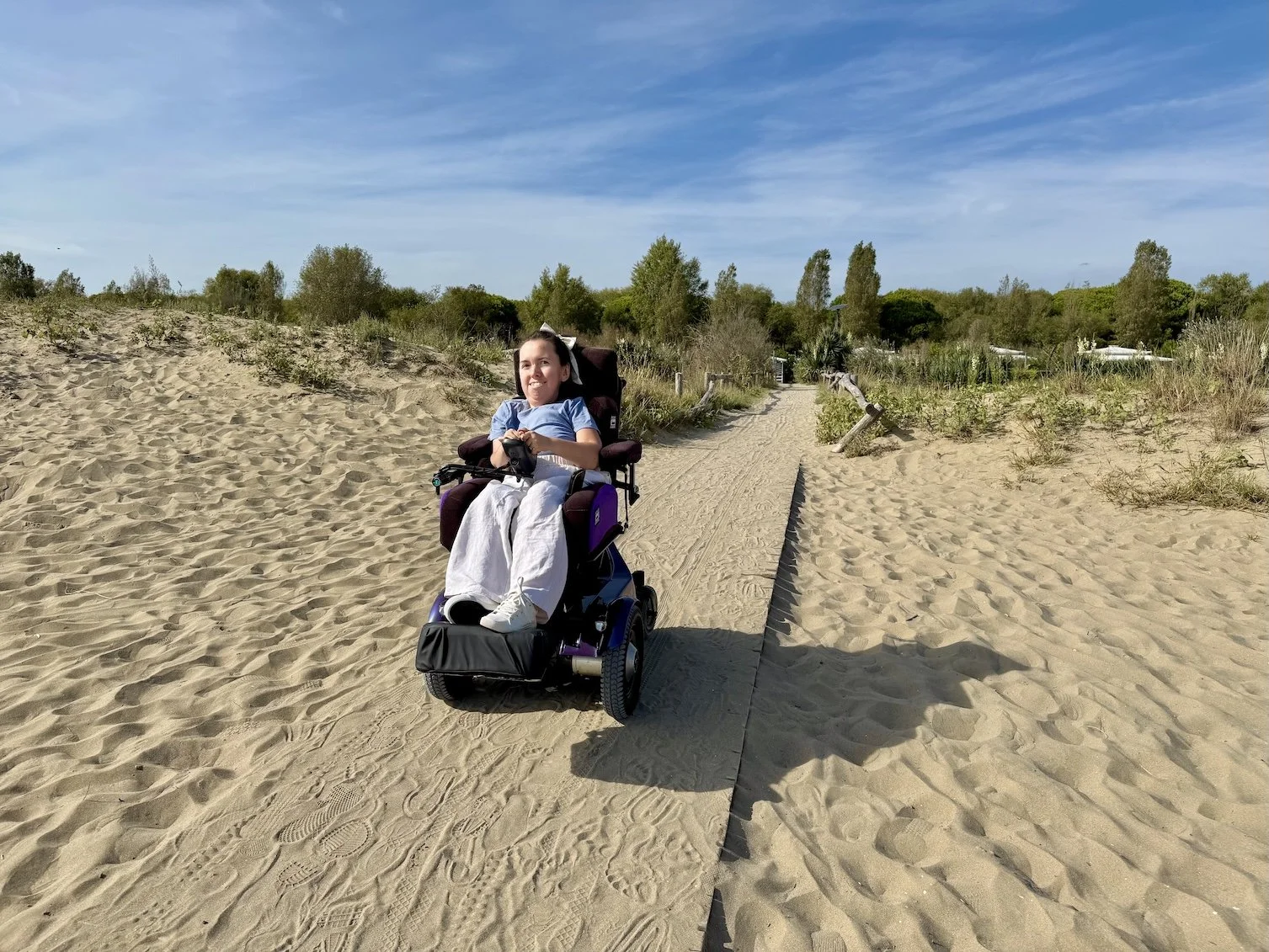
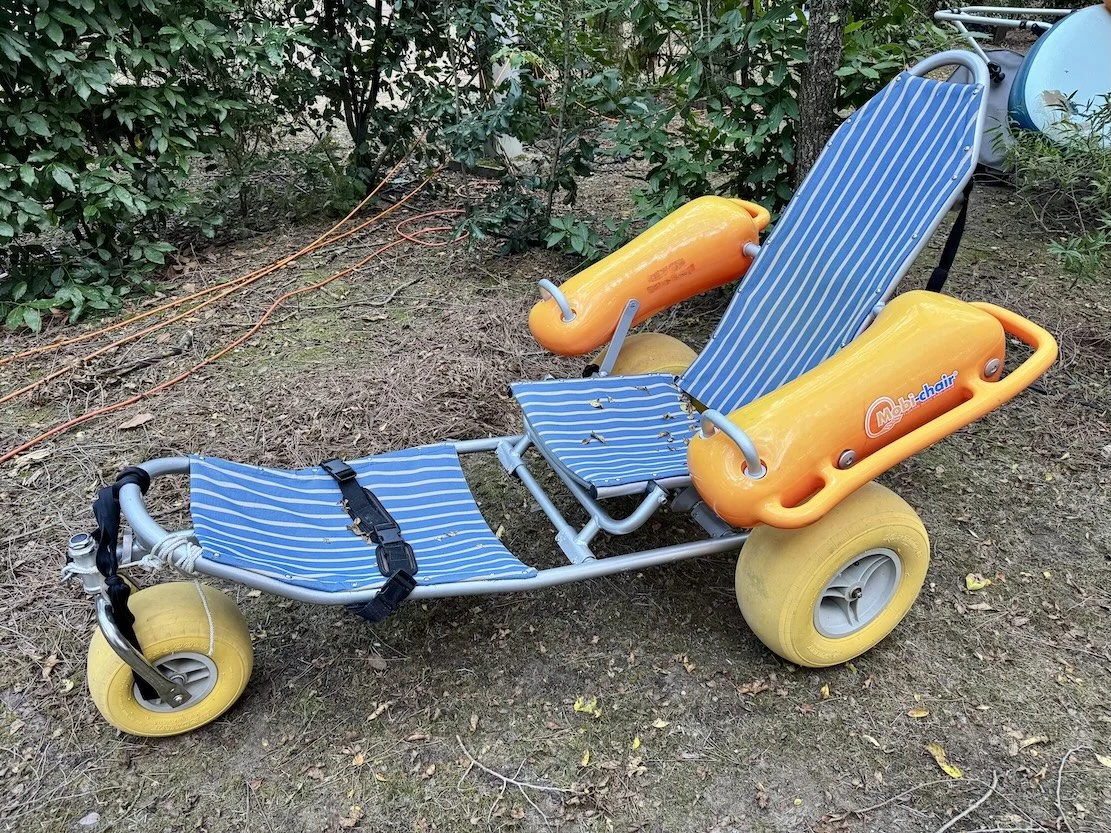
Access-wise, I was able to get everywhere I wanted to, including the spectacular beach, which has numerous firm paths, meaning I could take my powerchair across the sand. Better yet, the campsite have a number of beach/sea wheelchairs available to borrow — one of which was delivered to our pitch shortly after our arrival. All of this combined not only made it a memorable stay, but earned itself a spot on our list of favourite campsites ever!
Wheelchair Accessible Hotels in Venice
While we don’t have any personal experience with hotels in Venice, my research has found a number of wheelchair-friendly options across the city. Depending on your access needs, your budget, and the area you’d prefer to base yourself, below are some examples:
Top Tip: Between April and September the Venetian Lagoon is a haven for mosquitoes, so make sure you pack a good repellent. We picked some up from the campsite shop, along with some citronella candles, and they did a great job of keeping them at bay.
Getting to and Around Venice
With no vehicular access, the logistics of navigating Venice was one of our biggest concerns before our trip. Public transport has never been our forte — Pair that with my accessibility requirements and the fact that everything would be in a foreign language, and we were surely destined for disaster? Well, we’re pleased to report that we had a wonderful time in the city, without a single transport mishap!
There are numerous ways to arrive on the outskirts of Venice, including by train or car, parking in a large multi-storey car park, but if you want to get into the city, you will need to hop on a water bus (vaporetto) or water taxi. While some of the water taxi’s are accessible, it can be difficult to board them if the water is choppy, and they are obviously significantly more expensive than the vaporetto. Because of this, we only travelled on the vaporetto during our visit. These larger boats run at regular intervals throughout the day and night, and stop all over Venice, including the outer islands of Murano and Burano, and the Cavallino-Treporti peninsular, which we were camping on.
Is the Venice Vaporetto Wheelchair Accessible?
In short — Yes! We had a great experience travelling on the Venice vaporetto. Although not every stop is suitable for wheelchair users, the majority of them are, with ramps placed between the docks and the boats. The gradient of these ramps vary with the water level — they were a little on the steep side during our visit, but there are always crew members available to help guide you on and off.
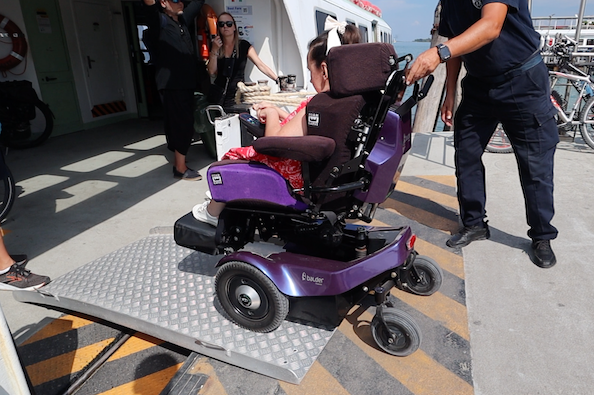
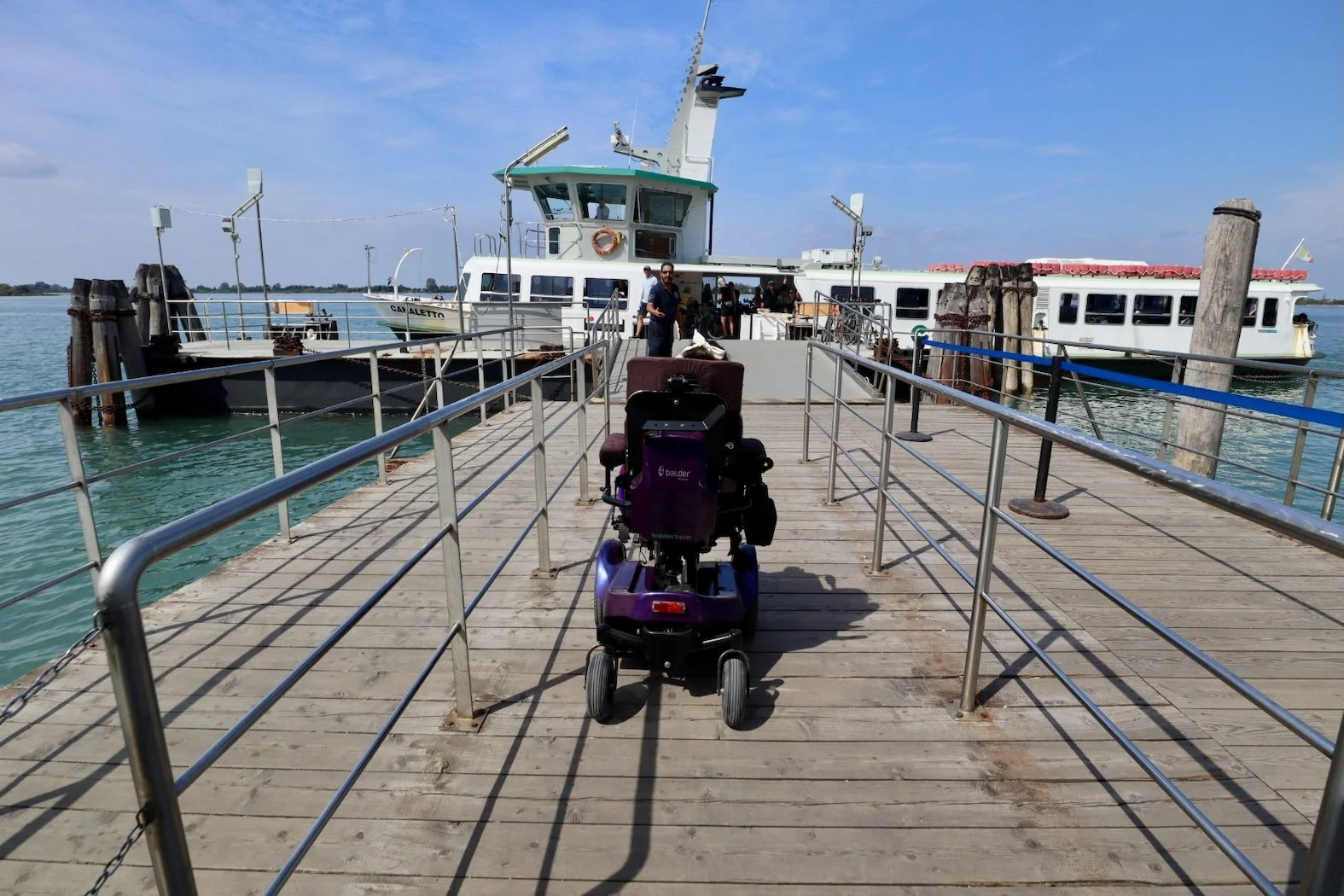
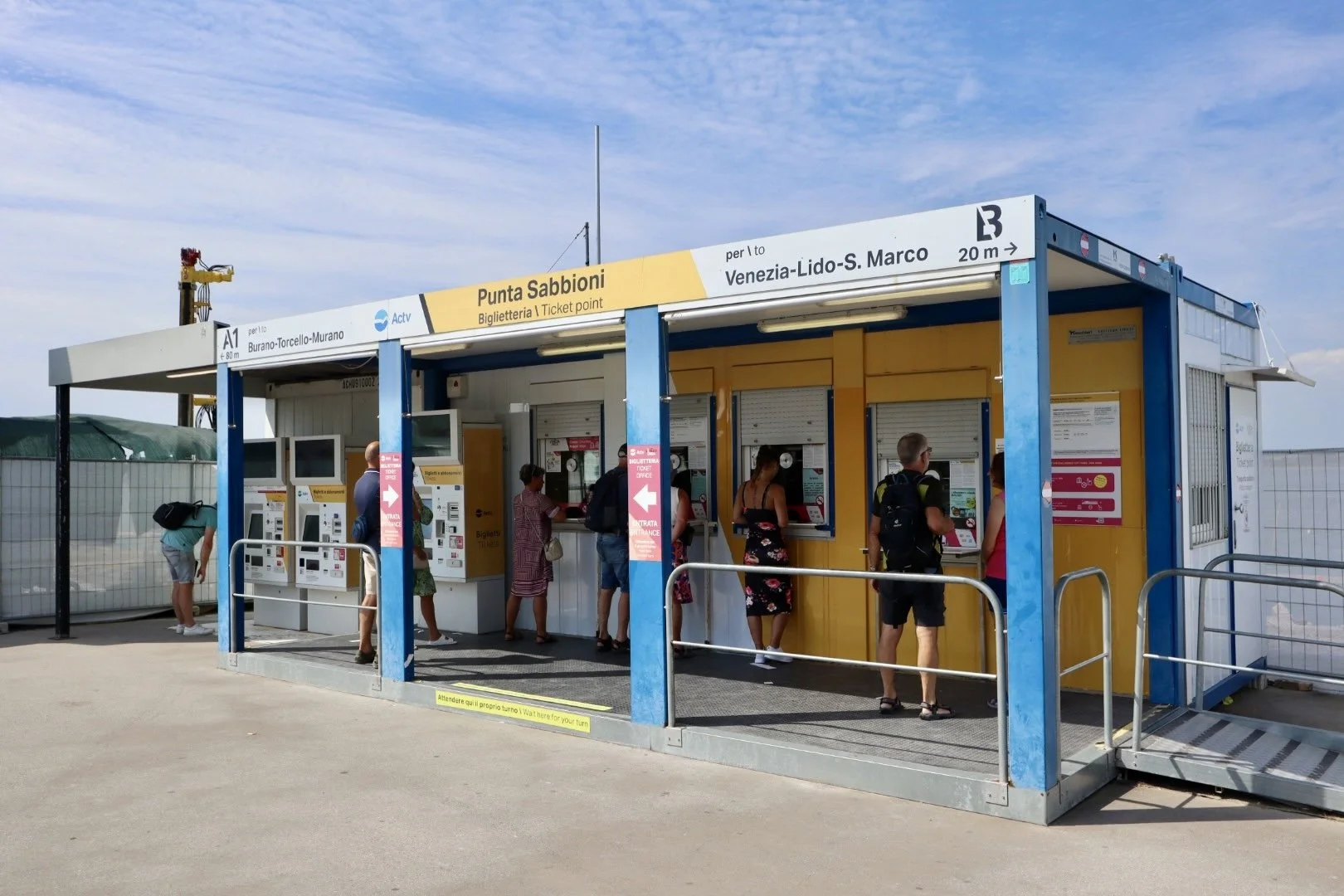
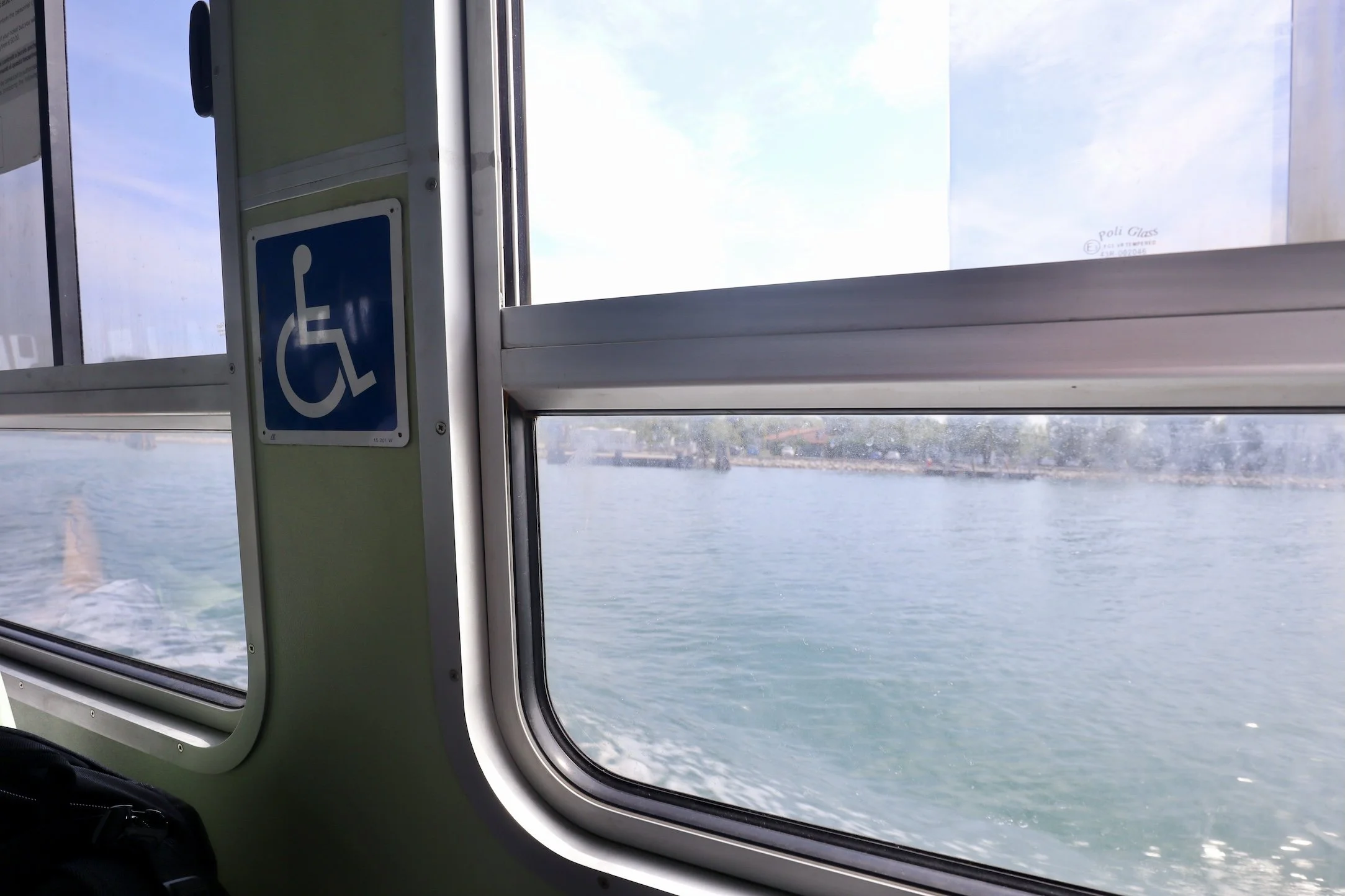
From the campsite we drove less than 10 minutes to the Punta Sabbioni vaporetto terminal, where we found plenty of parking, and a ramp up to the ticket booths. Amazingly, disabled tourists pay the “locals rate” to board, while their carer travels for free. This meant that Stephen and I paid a grand total of €3 for two return tickets, when the couple ahead of us paid €36 for the exact same. Being disabled does occasionally have its perks!
Like land-buses, they don’t hang around at each stop, so we boarded quickly before setting off. Seating is informal, but we found a dedicated wheelchair space, next to one of the large windows, to watch the world go by. A smooth 30 minutes later and we arrived in the bustling heart of Venice, St Mark’s Square, excited to explore.
Step-Free Bridges in Venice
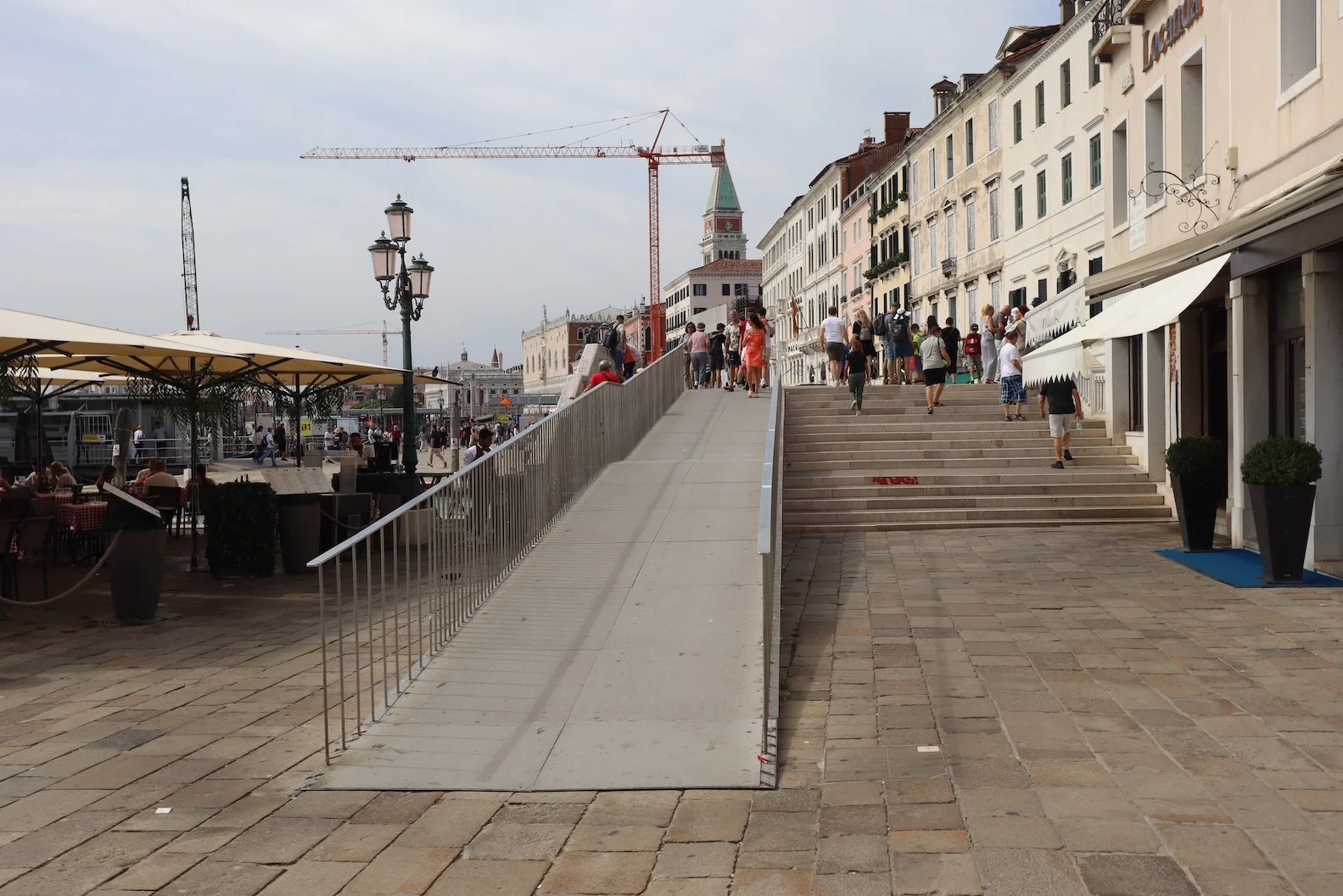
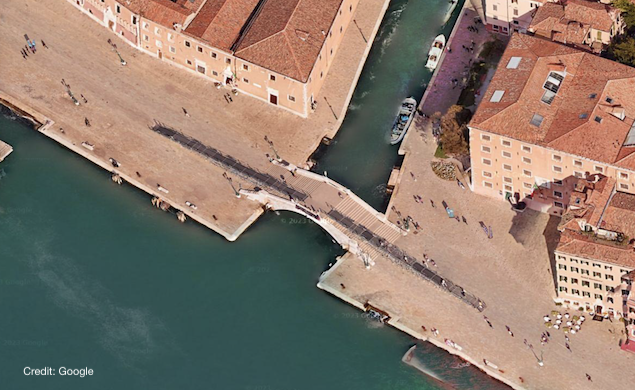
As I mentioned earlier, you can take the vaporetto throughout the city, but if you’d prefer to limit your use of public transport, you can explore a good amount on foot/wheel from St Mark’s Square.
The vast majority of bridges in Venice—although beautiful—have ancient stone steps which are impassable with a wheelchair, so we weren’t expecting to be able to get very far. However, we were pleasantly surprised by just how far we could get! The St Mark’s Square area alone is bigger than it looks on the map (you can easily fill an entire day there), plus a large strip east of this has bridges with semi-permanent ramps fitted to them, enabling you to venture further afield.
Check out our Accessible Venice Map, for information on where to find these ramped bridges, as well as the locations of accessible public toilets.
Wheelchair Accessible Things to do in Venice
St Mark’s Basilica
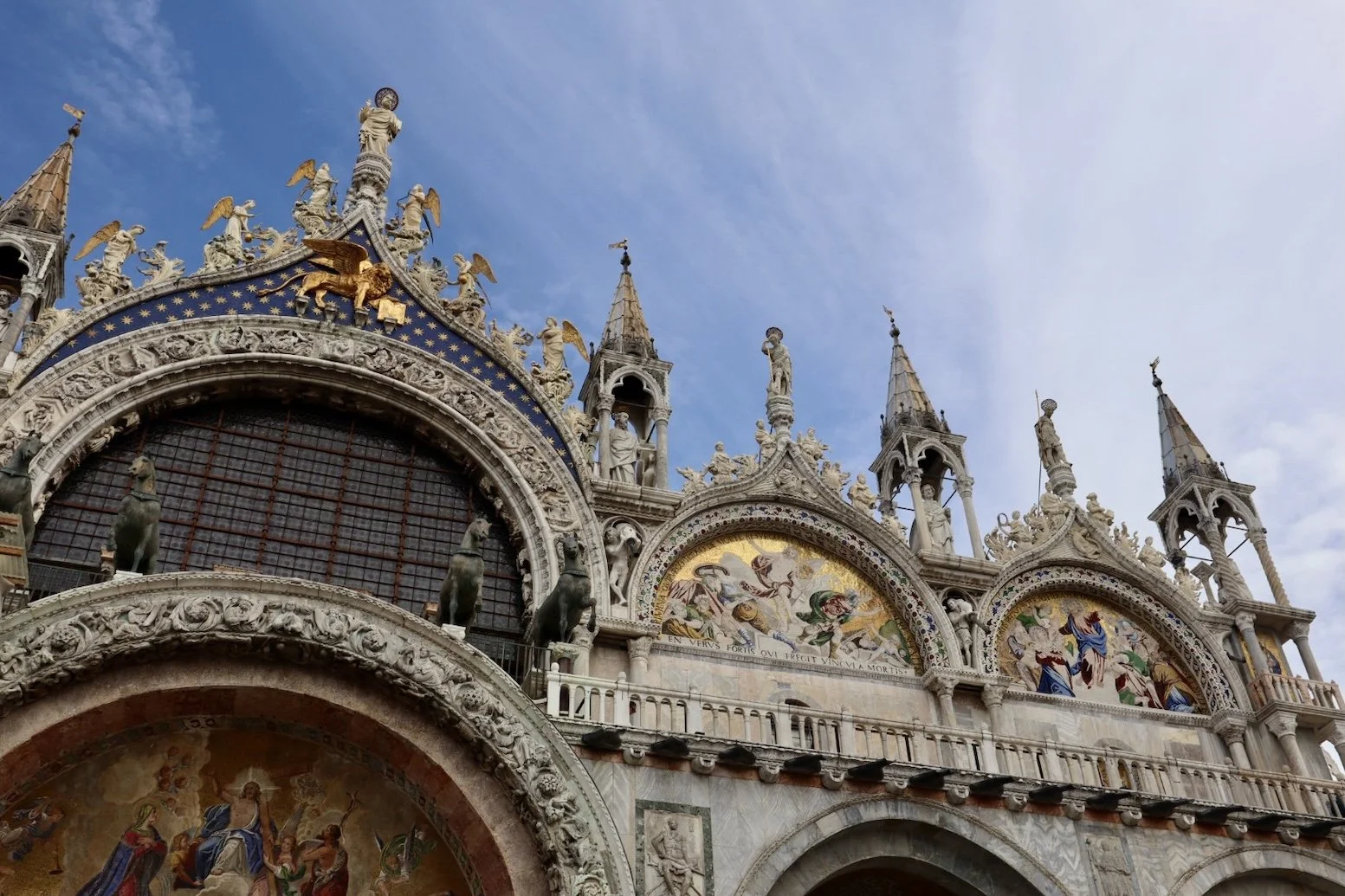
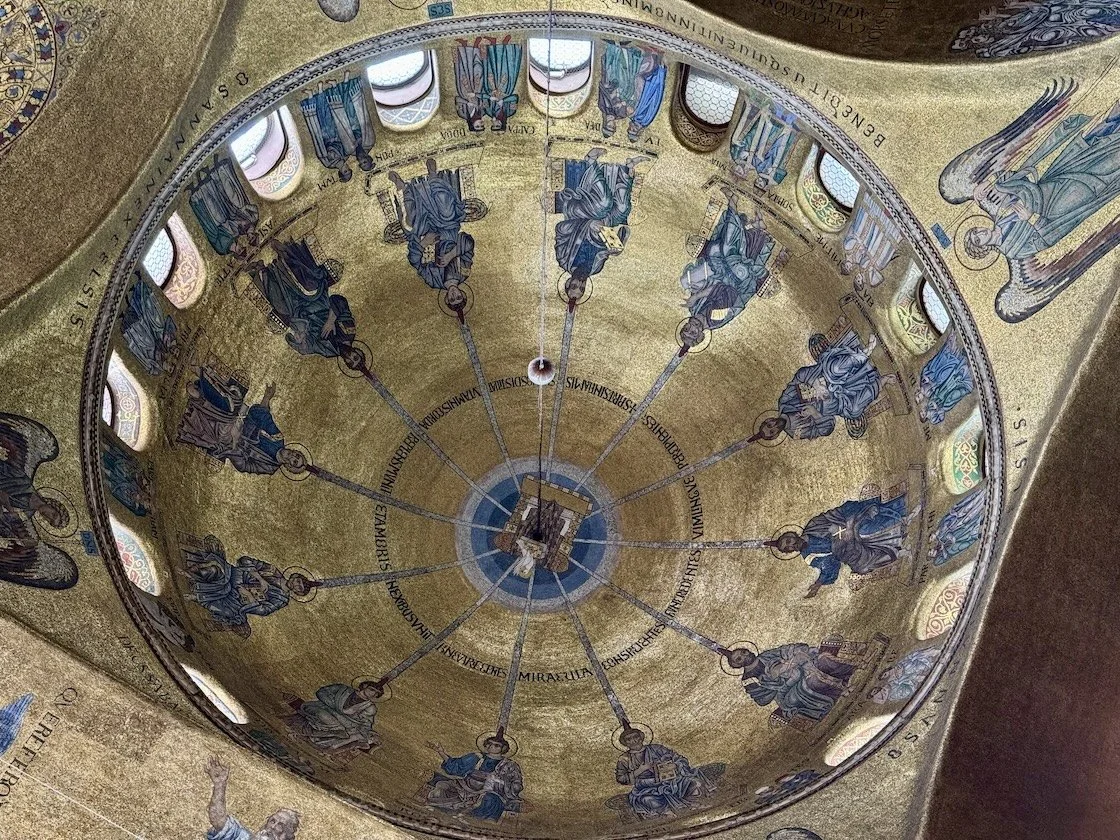
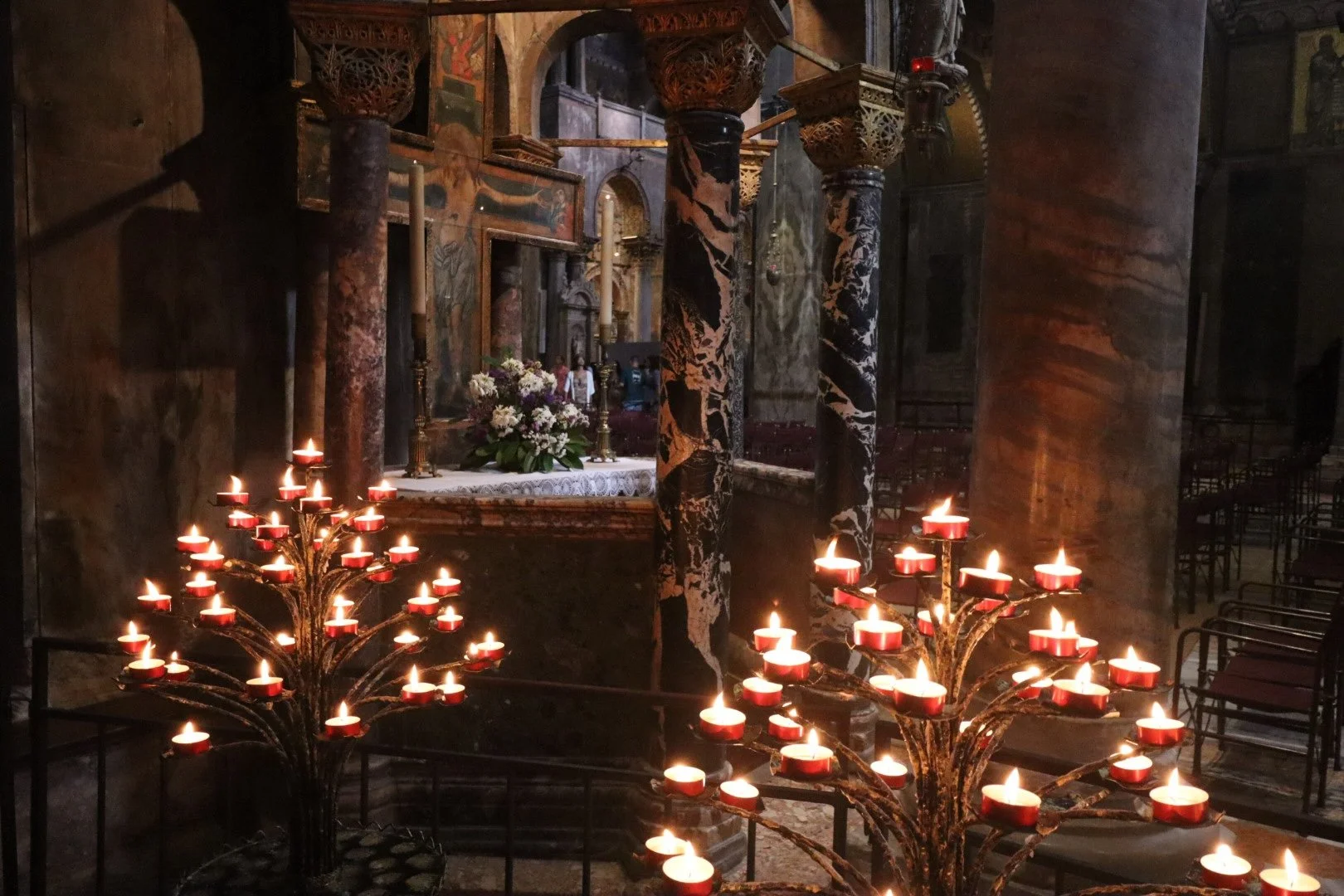
This grand, ancient cathedral sits in the heart of St Mark’s Square. Its palatial domes and intricate stonework make it impressive to look at from the outside, but inside is where the real magic happens. Leaving the hustle and bustle of the square behind, we found hushed conversations in its peaceful interior. Flickering candles added to the atmosphere, bouncing light between the marble columns and reflecting it around the gold-covered ceiling-domes.
Although I couldn’t get everywhere, I was able to explore the main nave, which is impressive enough. There is a dedicated accessible entrance located on the left side of the building (just off Piazzetta dei Leoncini), which had a series of ramps and staff to guide me through. Inside, the floor is a little uneven, but perfectly manageable in a wheelchair.
The Doge’s Palace
Full of art and history, the Doge’s Palace was once home to the Venetian government. Now it’s a fascinating place for tourists to visit, with lots to see, and even more to learn about (we’d recommend allowing a couple of hours to explore properly). You can book a guided tour for maximum education, but there are also information boards located in each room, as well as friendly staff members who are very happy to answer questions.
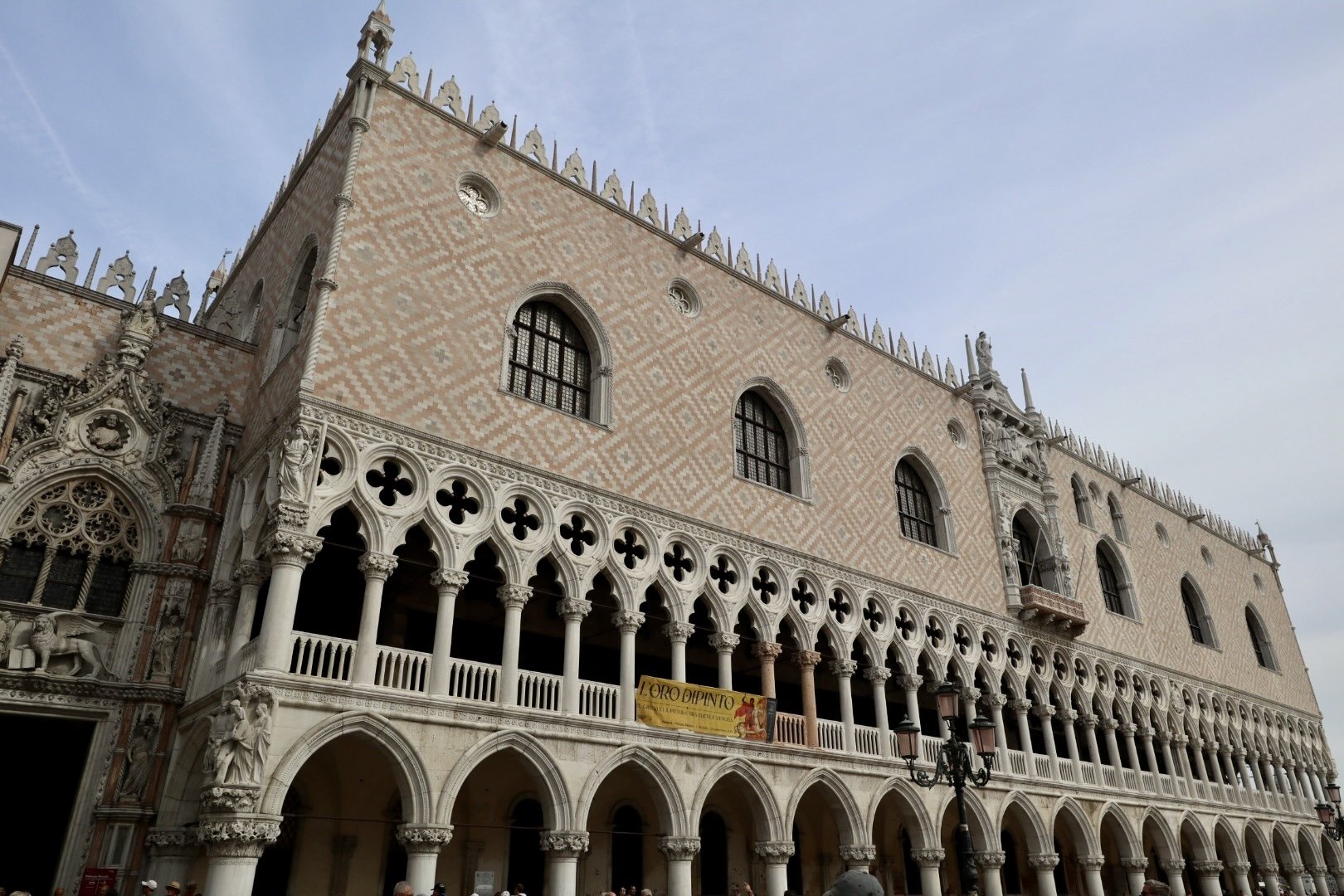
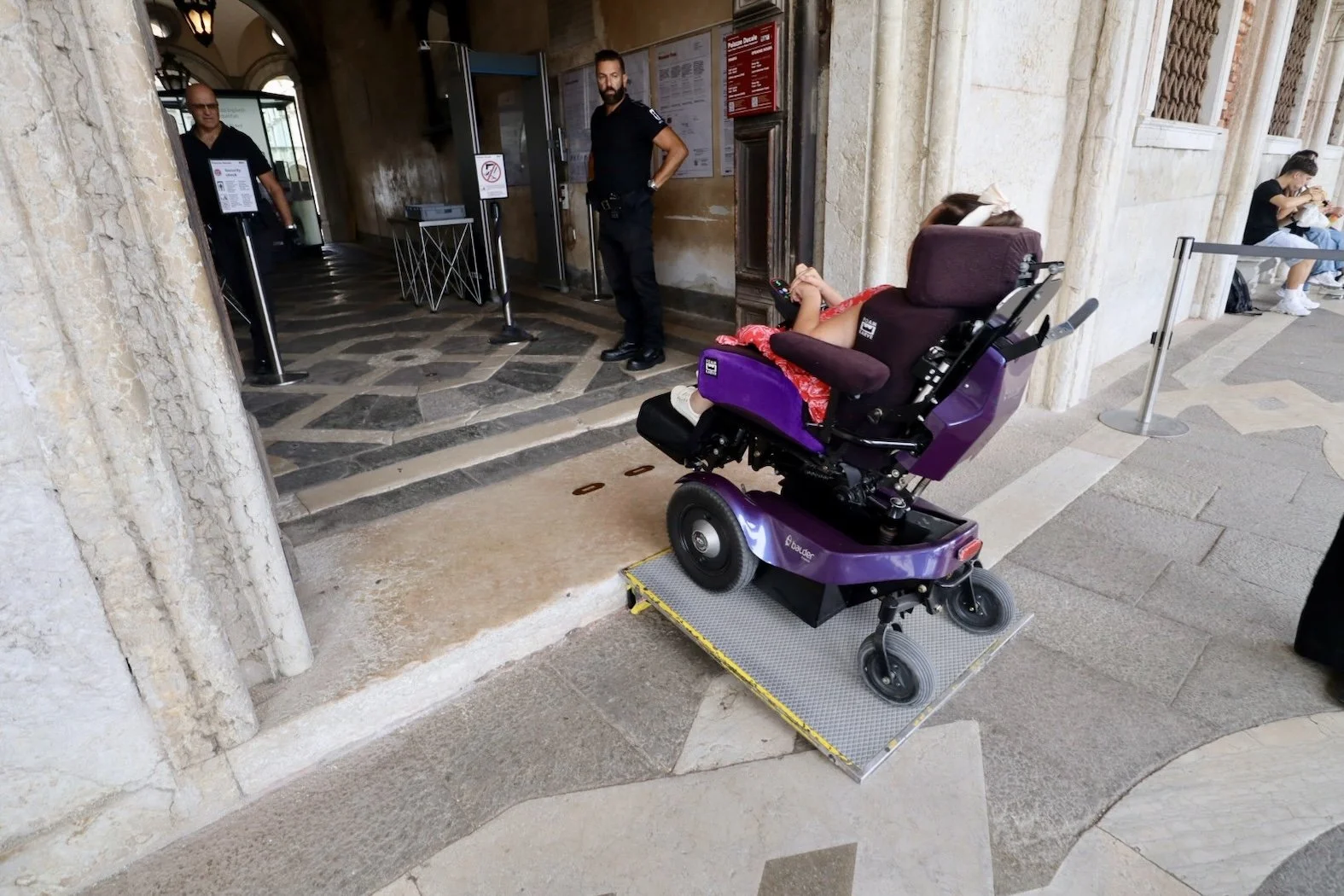
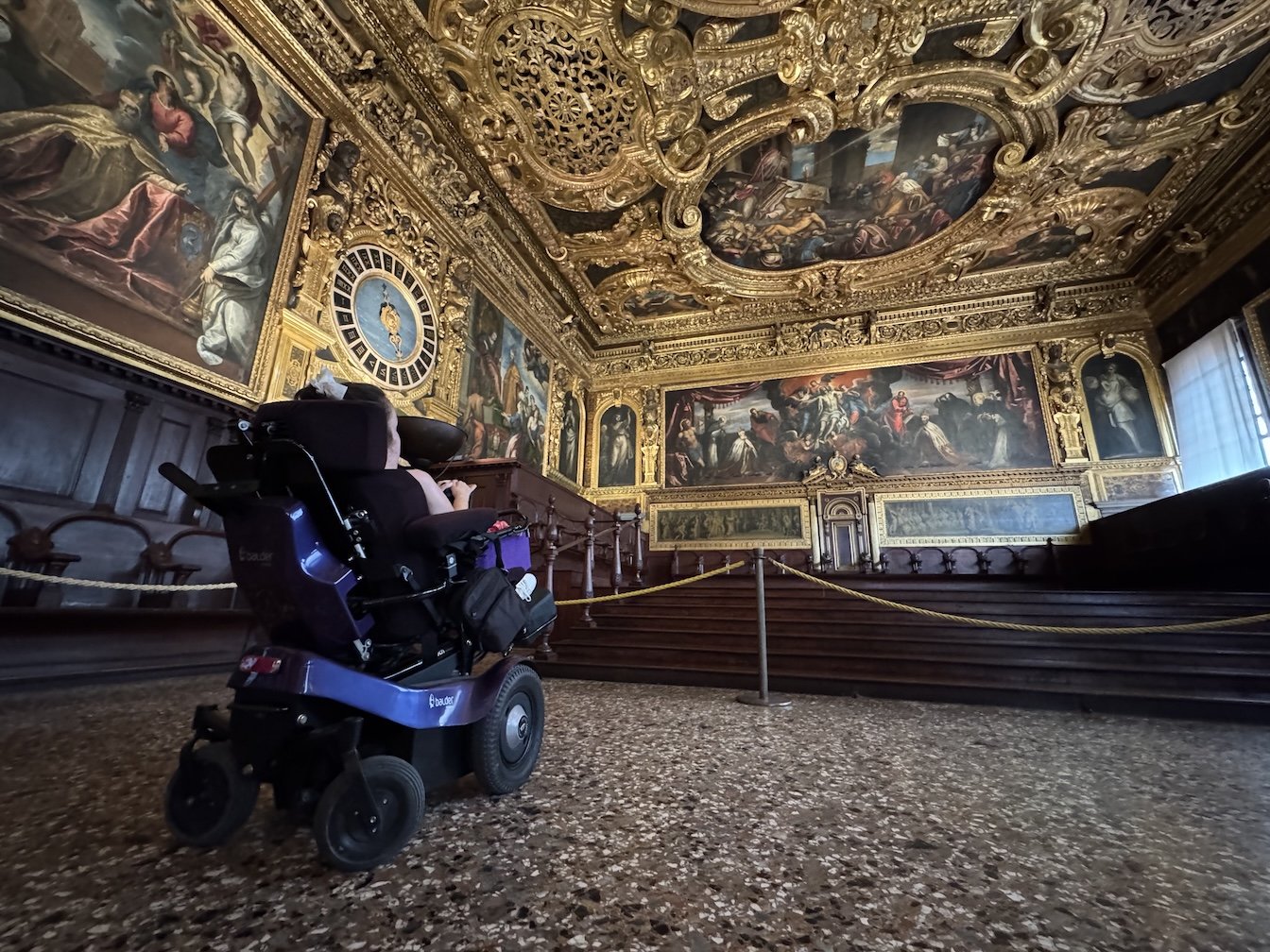
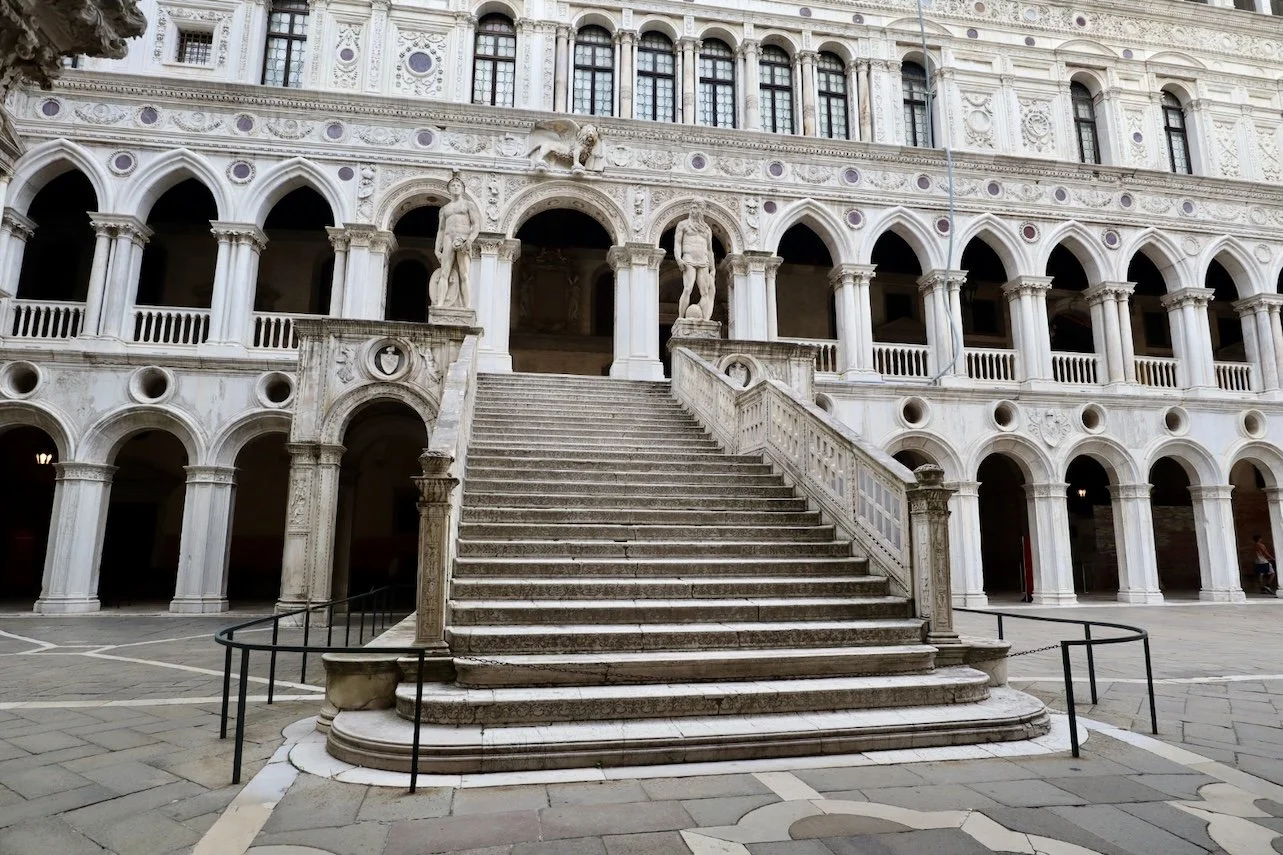
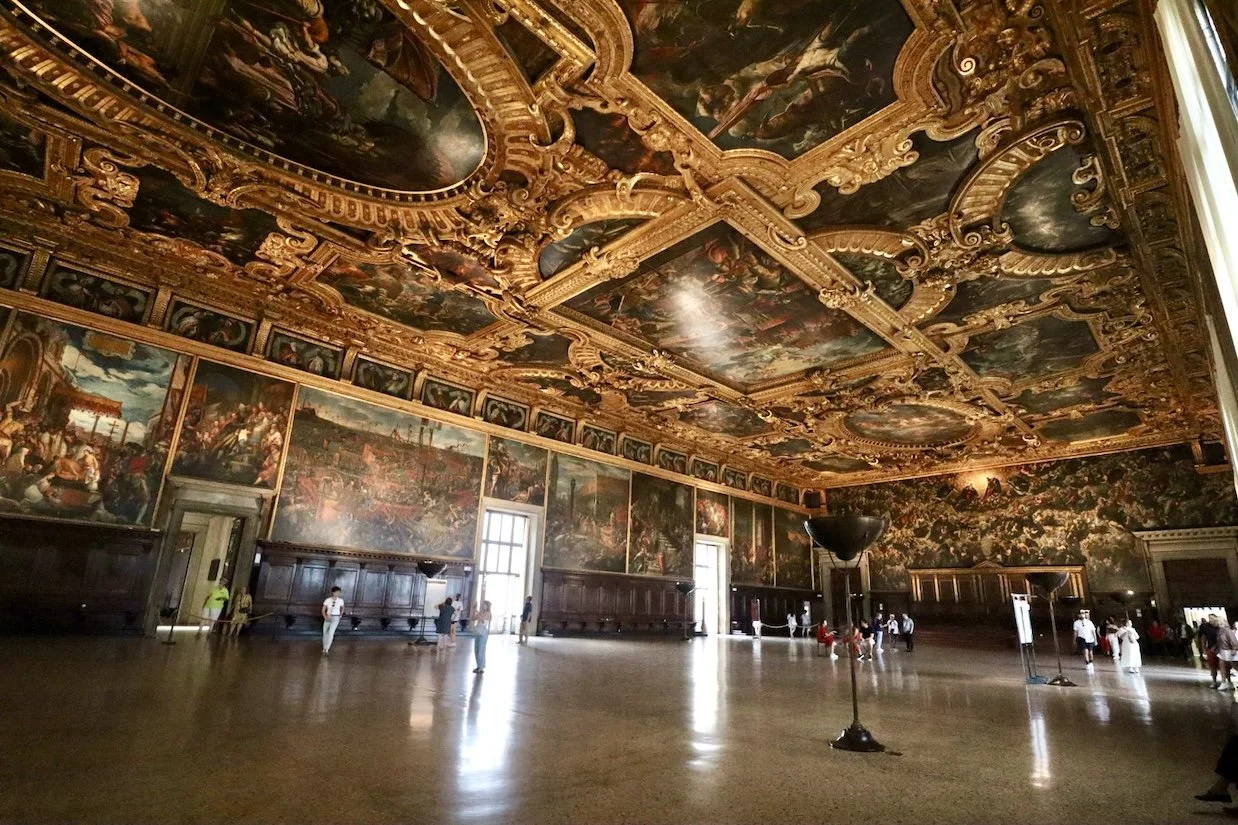
Its unassuming exterior doesn’t do justice to the grandeur inside. This palace was designed as an opulent show of power and wealth, and it certainly does that! Huge rooms house marble, renaissance statues, fireplaces you could set up camp in, and the most breathtaking, painting-covered ceilings you could imagine. I couldn’t help but recline my chair and take it all in.
Accessibility was good. Again, I couldn’t get to all areas, but I felt satisfied with what I could see and do. There are staff members at the entrance, who put down a portable ramp for me, and we were escorted to the lifts when travelling between floors. Tickets are free for disabled visitors and their carers (another disability perk!), and there is a small-but-functional accessible toilet in the courtyard.
Top Tip: Keep looking up! Venice is full of art—and a lot of it is above eye level. Whether it’s stone carvings, stained glass or detailed paintings, you’ll find beauty all around you.
Get Lost Amongst the Alleys
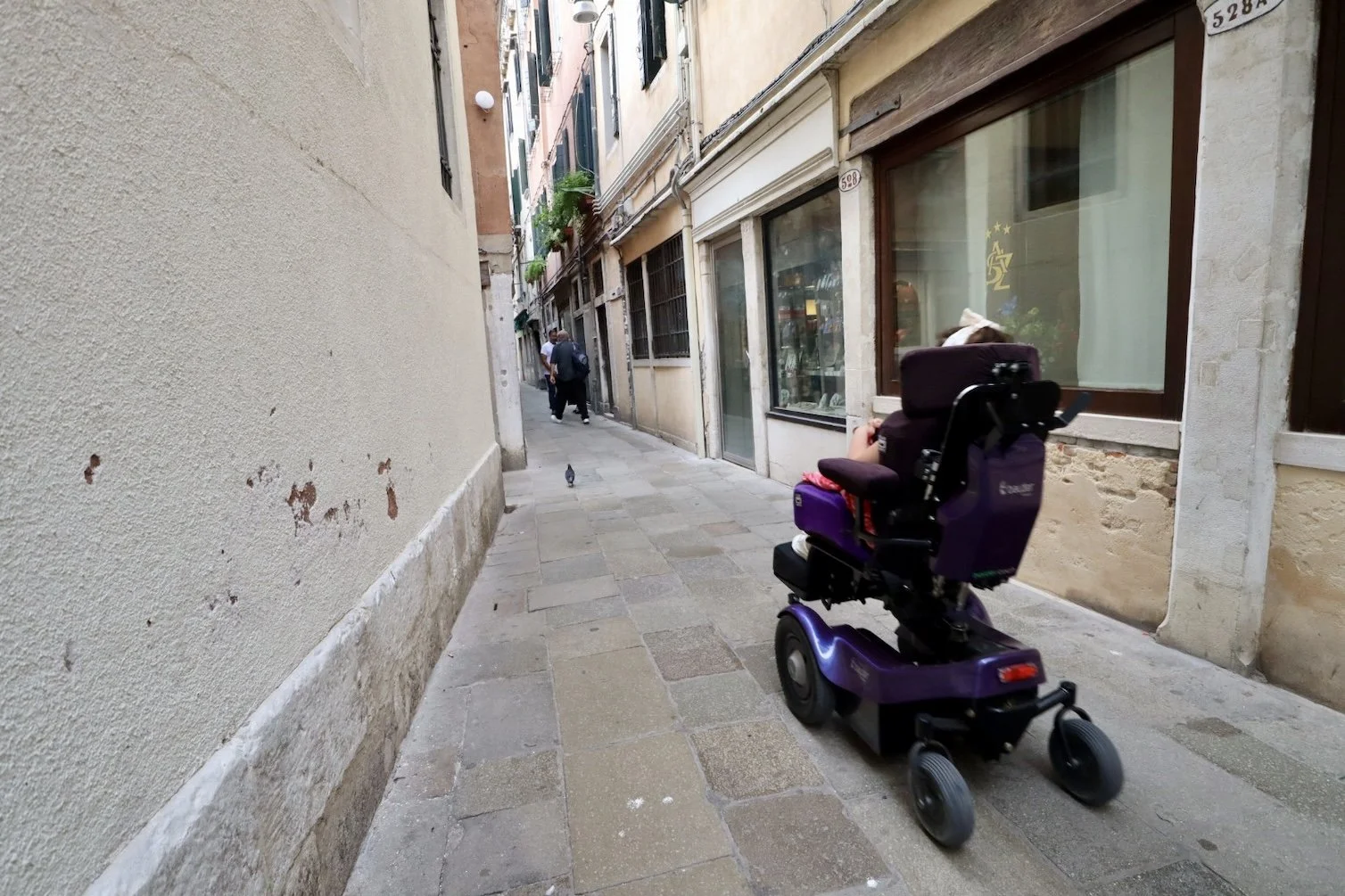
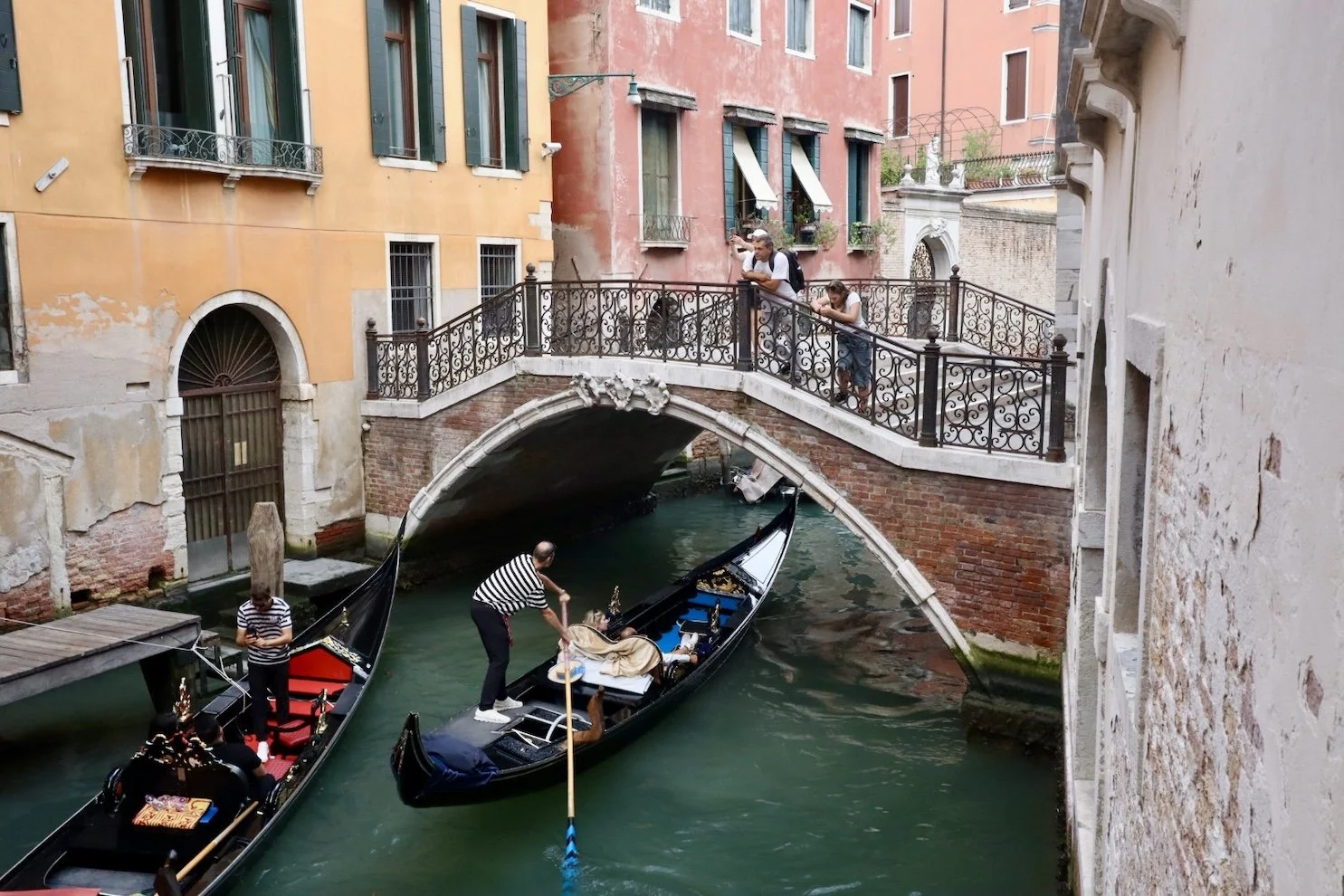
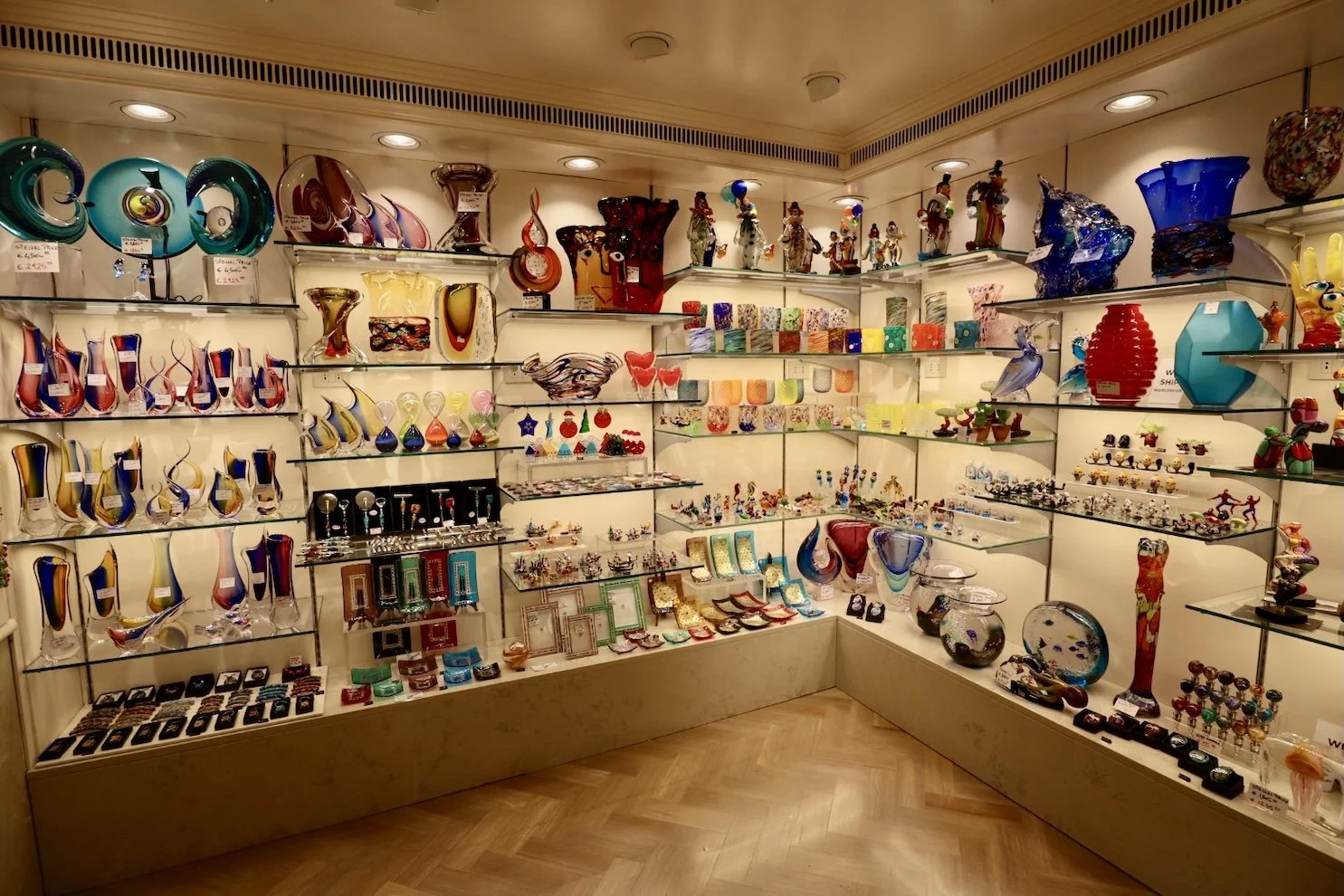
Although we loved the grandeur of St Mark’s Square, getting lost amongst the rustic alleyways gave us a sense “true” Venice. Cathedrals and palaces were replaced by small shops (a mixture of designer labels and independent boutiques), cafés and gelateria’s. Flaking paint and chipped stone only added to its quaint charm.
While the majority of the bridges we encountered were inaccessible, whenever we did, we’d simply admire the passing gondolas, change direction and head down a different alley. We had a fantastic time wandering without aim or direction, and saw a completely different side to the city.
A Taste of Italy
You can’t visit Italy without trying some of its world-class food—and Venice has so many eateries to choose from! From pizza restaurants to cafés and gelato shops, you really are spoilt for choice.
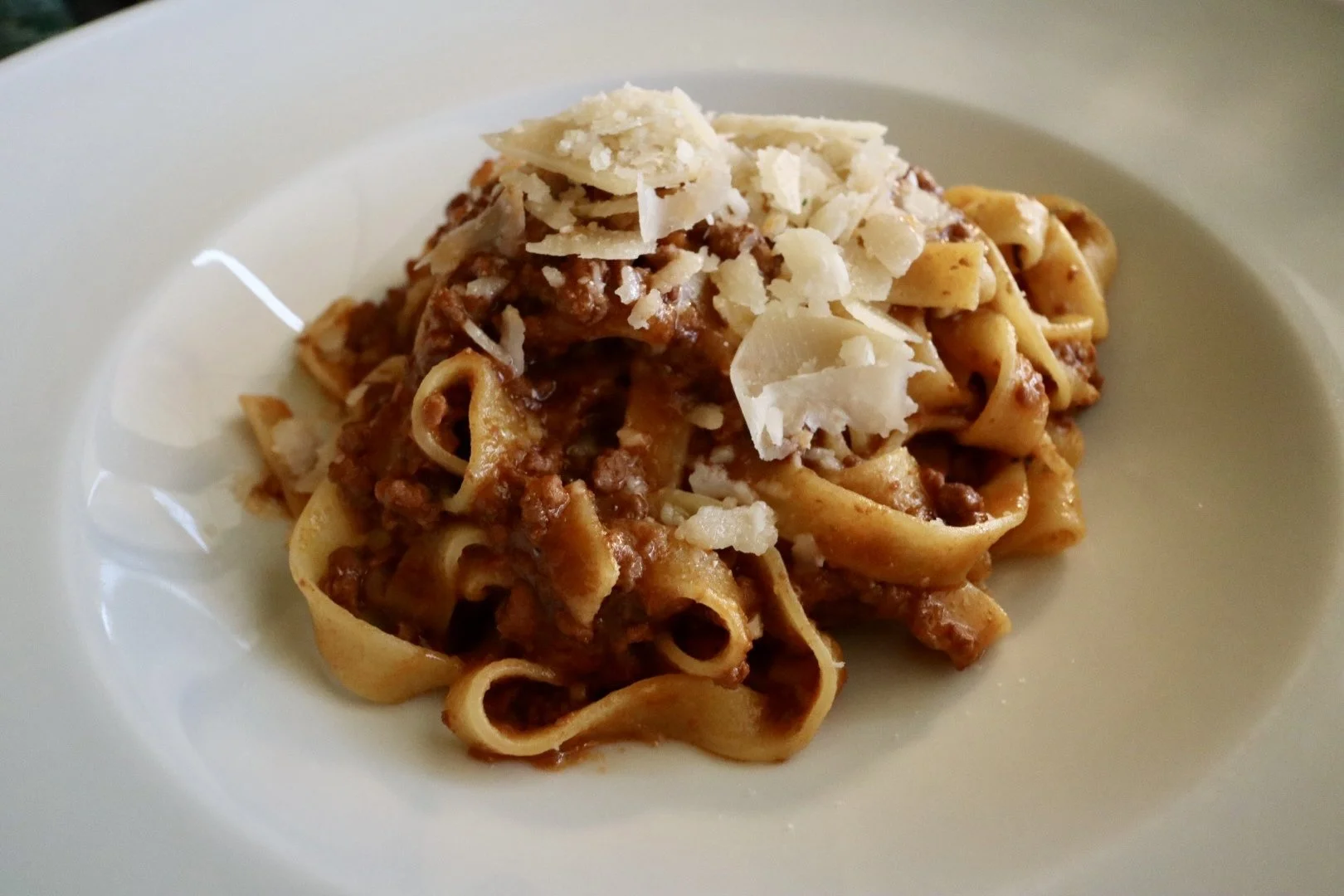
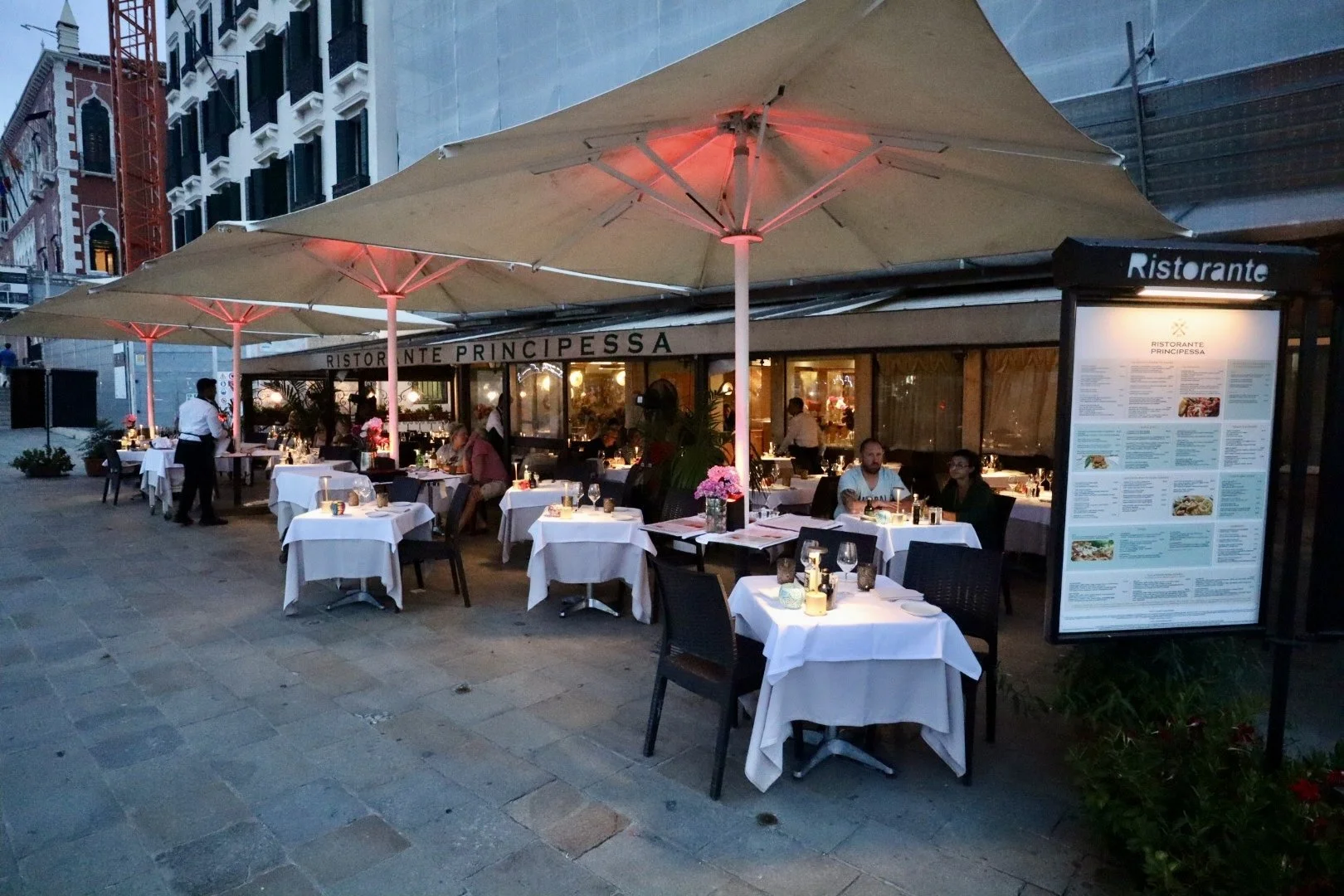
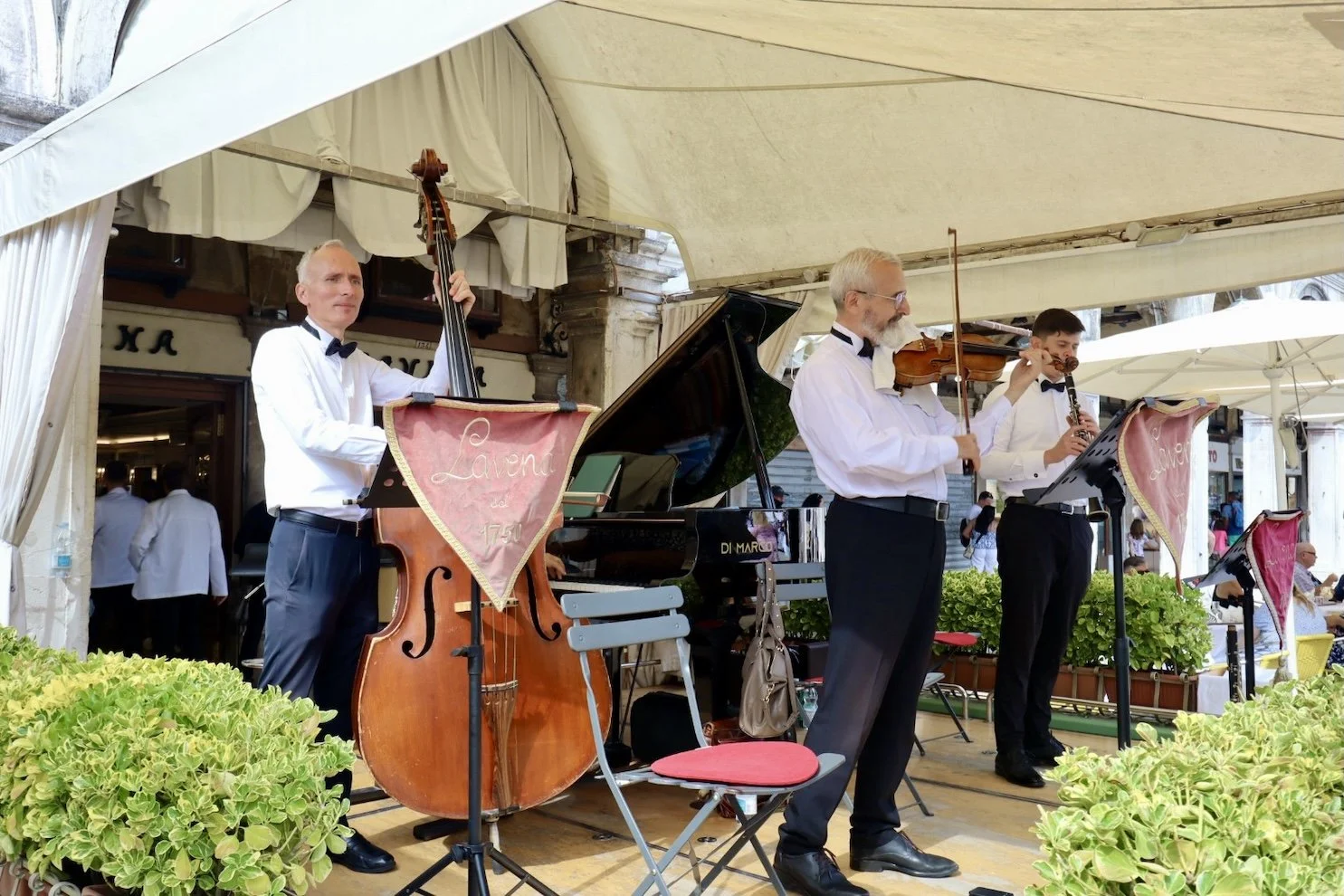
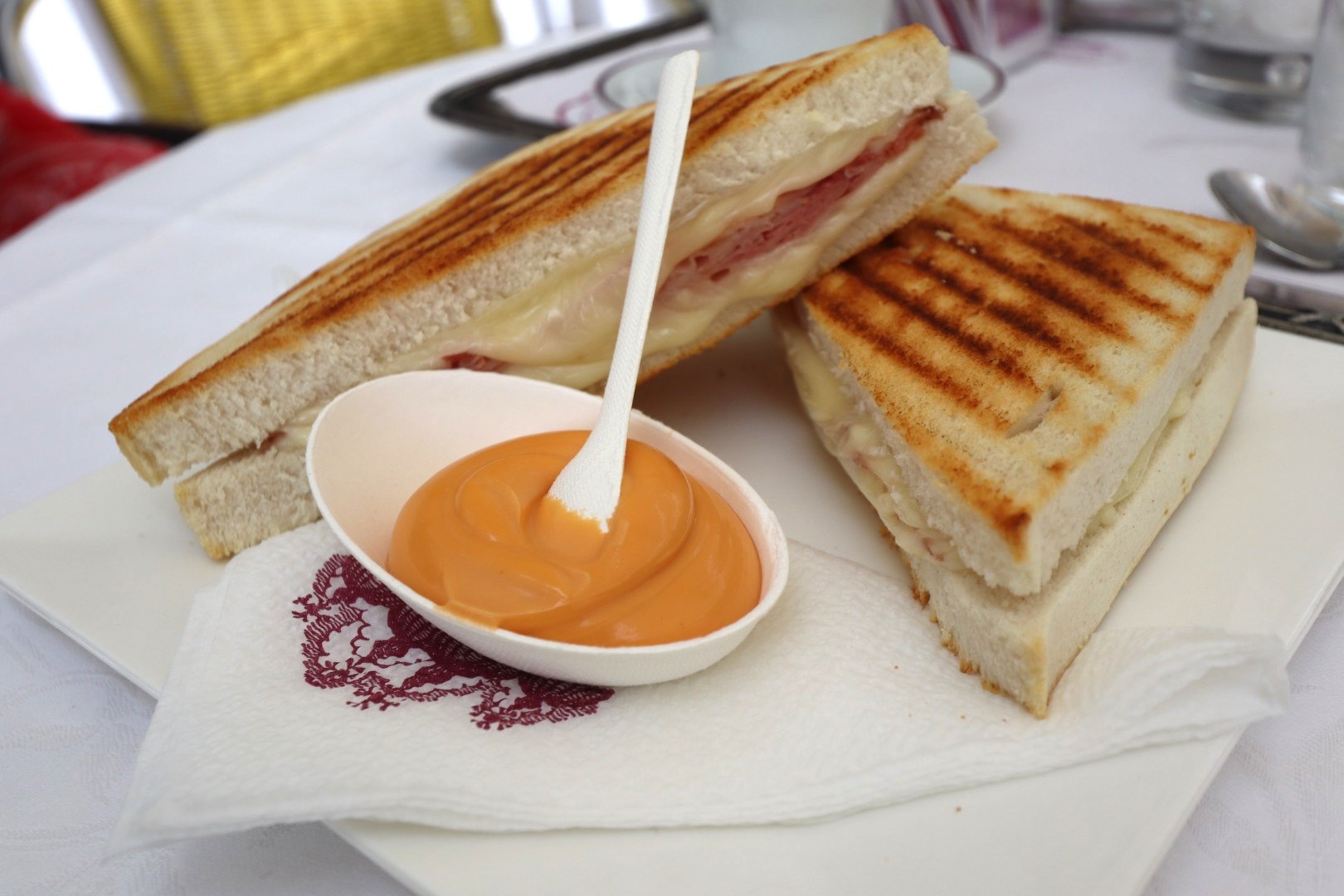
If you don’t mind paying a bit extra, it’s worth stopping for a drink in one of the many cafés in the bustling St Mark’s Square. We paid €30 for one toasted sandwich, an espresso and a glass of water, which took us aback at the time, but was worth every cent. Sitting in the sunshine next to a 4-piece orchestra, surrounded by Venice’s most notable landmarks, is a once-in-a-lifetime opportunity — and an experience that will live on in our memories forever.
Away from the square, you will find much more reasonably priced restaurants, with food that tastes just as good. We enjoyed a wonderful pasta dish, al fresco in the evening air, at Ristorante Principessa on the waterfront. The sun was just beginning to set and the city began to twinkle, reflecting on the water that lapped up beside us. Another memorable moment.
When is the Best Time to Visit Venice?
We visited in early September, and although we have nothing to compare it to, we wouldn’t have changed a thing! By going during shoulder-season, we avoided the big summer crowds, while still benefiting from the beautiful weather (temperatures were 20ºc — 25ºc). If you can’t make it during September, late spring could also be a great time to visit, with sunny skies and flowers in bloom.
Winter in Venice—while beautiful in its own way, with hot chocolates in cosy cafés and lots of twinkling lights—wouldn’t be my first choice. A highlight for us was sipping coffee in the square and soaking up the atmosphere, which wouldn’t have been the same in cold or wet weather. There’s also the aqua alta (high water) to consider. This phenomenon can put portions of the city under more than a metre of water, and can occur any time between November and January. The city is still able to function, with the construction of raised walkways, but I’m not sure how suitable these would be for wheelchair users, and I personally wouldn’t want to risk it.
Note: On peak days between April and July, there is a “Venice Access Fee” for day visitors, which needs to be pre-booked. This costs €5—€10 per person, depending on how far in advance you book. Exemptions are available — Find out more on the Vènezia Unica website.
Whether you choose to visit in the spring, summer, autumn or winter, Venice is sure to leave a lasting impression on you. We are not usually city people, but we fell head over heels in love with it. It’s full of history, culture, incredible food and mind-blowing architecture. It was a real bucket-list destination for us, and if it’s not already on your list, we highly recommend you add it!
Watch our full road trip around northern Italy
In possibly our favourite trip of all time, we took in the mesmerising Lake Maggiore, navigated our way around the canals of Venice, and became awestruck by the Dolomites mountains. Watch it all unfold in our YouTube video.