Exploring the Cairngorms: Our Highland Escape
From mountain views to mystical waters, we were blown away, not only by the scenery, but by how easily accessible the Cairngorms National Park is. We didn’t just enjoy our week there — it quickly became one of our favourite parts of Scotland. Here’s why…
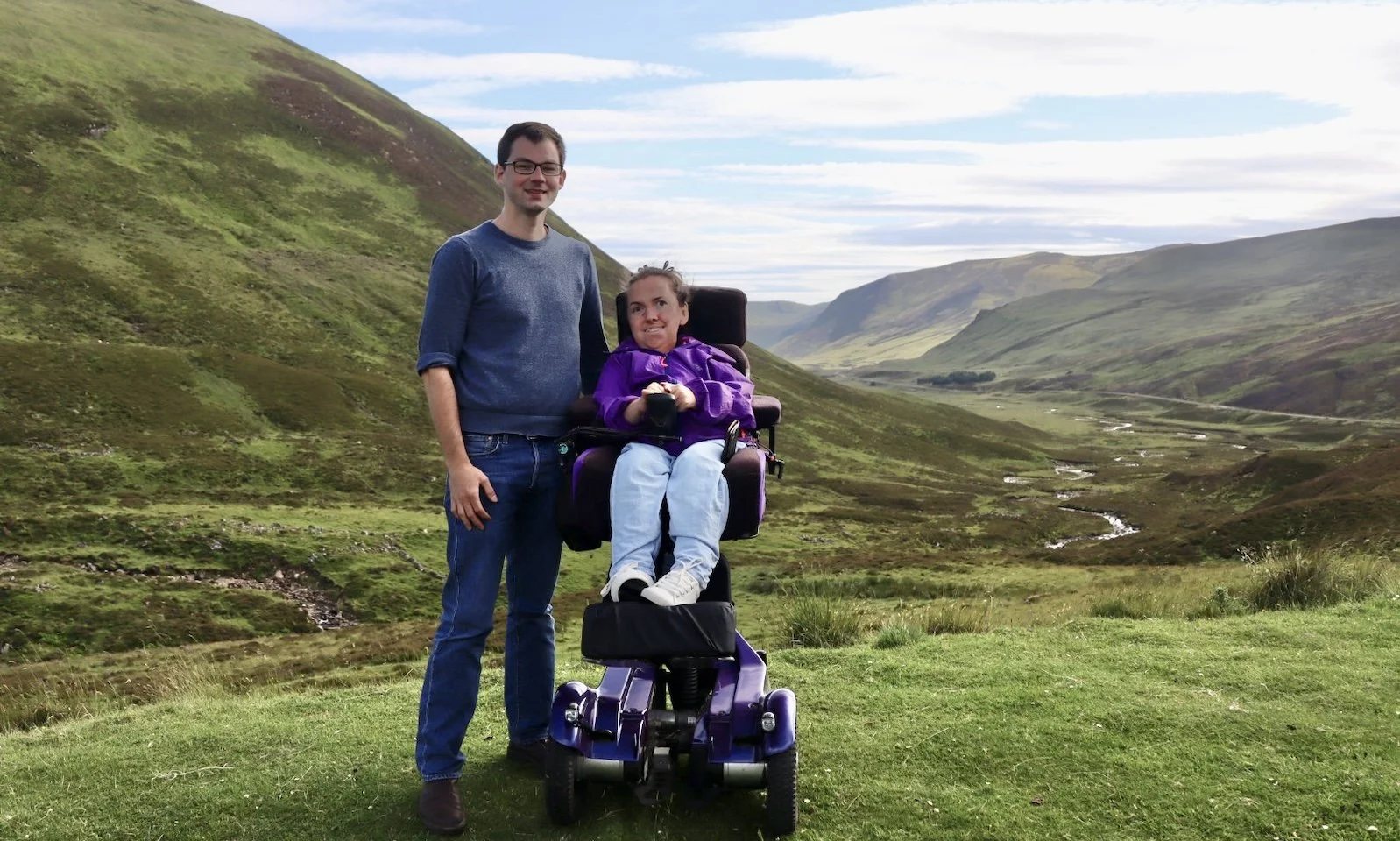
In the 8 years Stephen and I have been travelling together, we’ve explored Scotland extensively — from the Scottish Borders to the Outer Hebrides, and (almost) everywhere in between. But for one reason or another, the Cairngorms is a spot we just seem to keep missing, so we couldn’t wait to dedicate a full week to exploring this breathtaking part of the country.
A Journey to Somewhere New
You can’t beat the feeling of crossing into the Highlands. It’s a feeling of awe at the dramatic change of landscape, and anticipation for what’s to come. To me, the forests, mountains and lochs are symbols of true Scotland—of true adventure—and just seeing it all through the car window was enough to get us buzzing with excitement.
Even from the A9 the views were impressive, but passing through the ski-resort town of Aviemore we felt as though we’d entered a faraway land, with alpine-esque architecture that reminded us of some of our overseas tours. Fifteen minutes from this lively town, we found a tranquil haven and our home for the next few days, Glenmore Campsite.
Glenmore Campsite Review
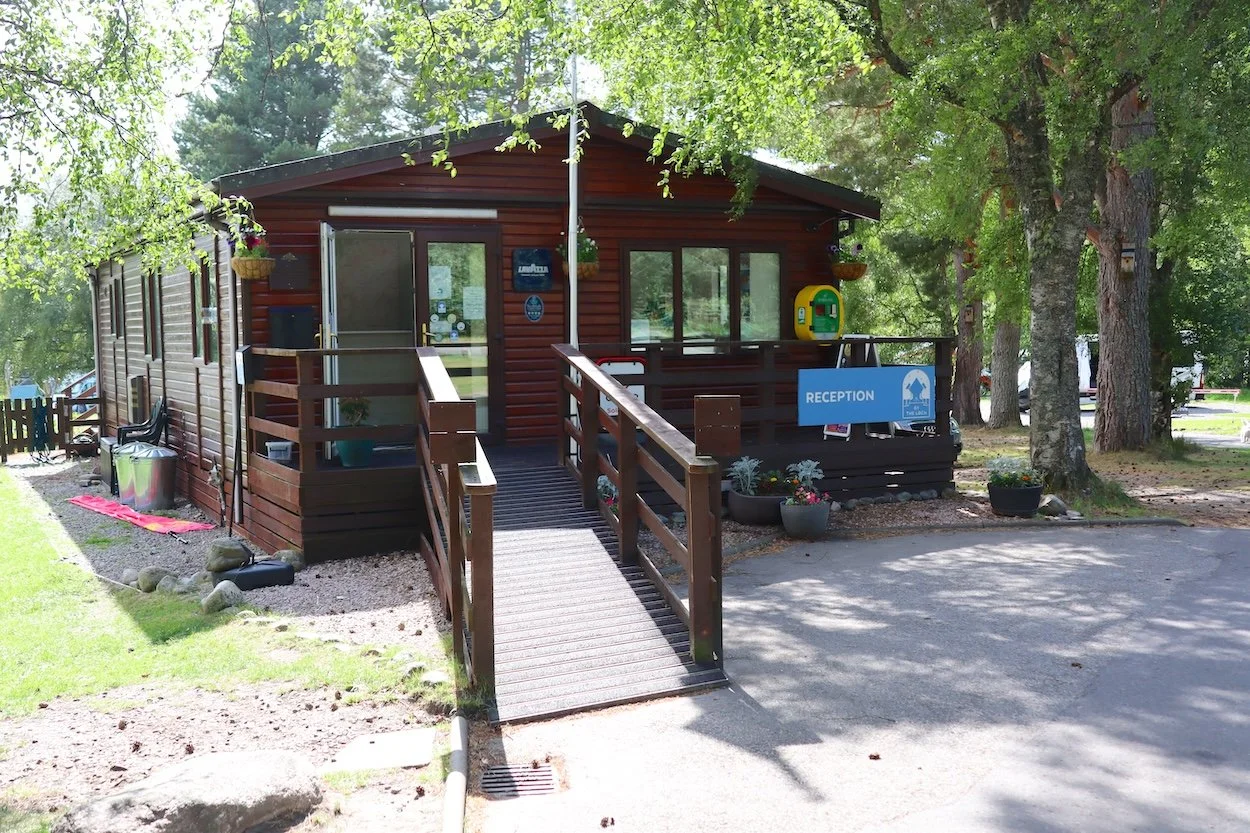
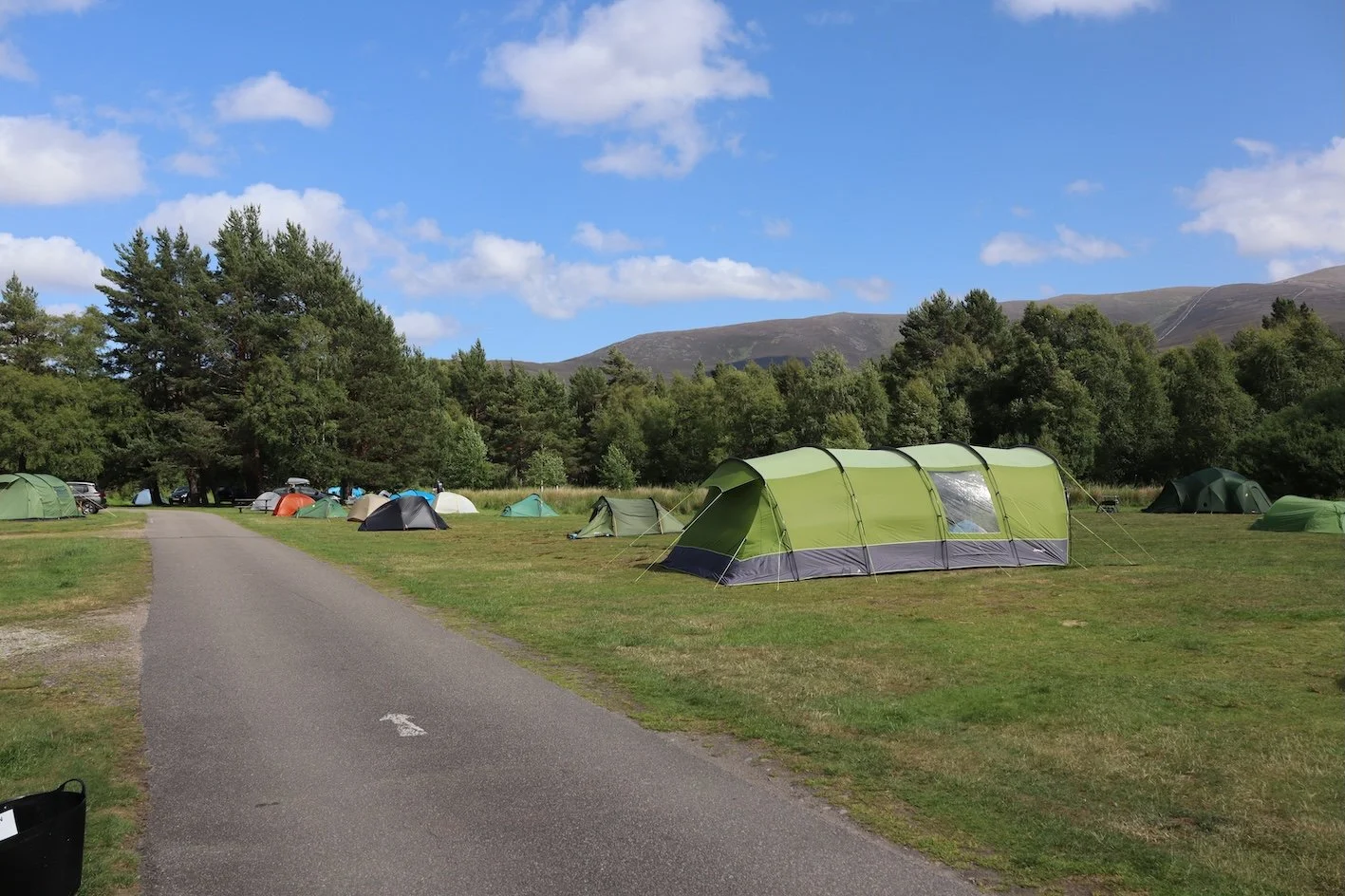
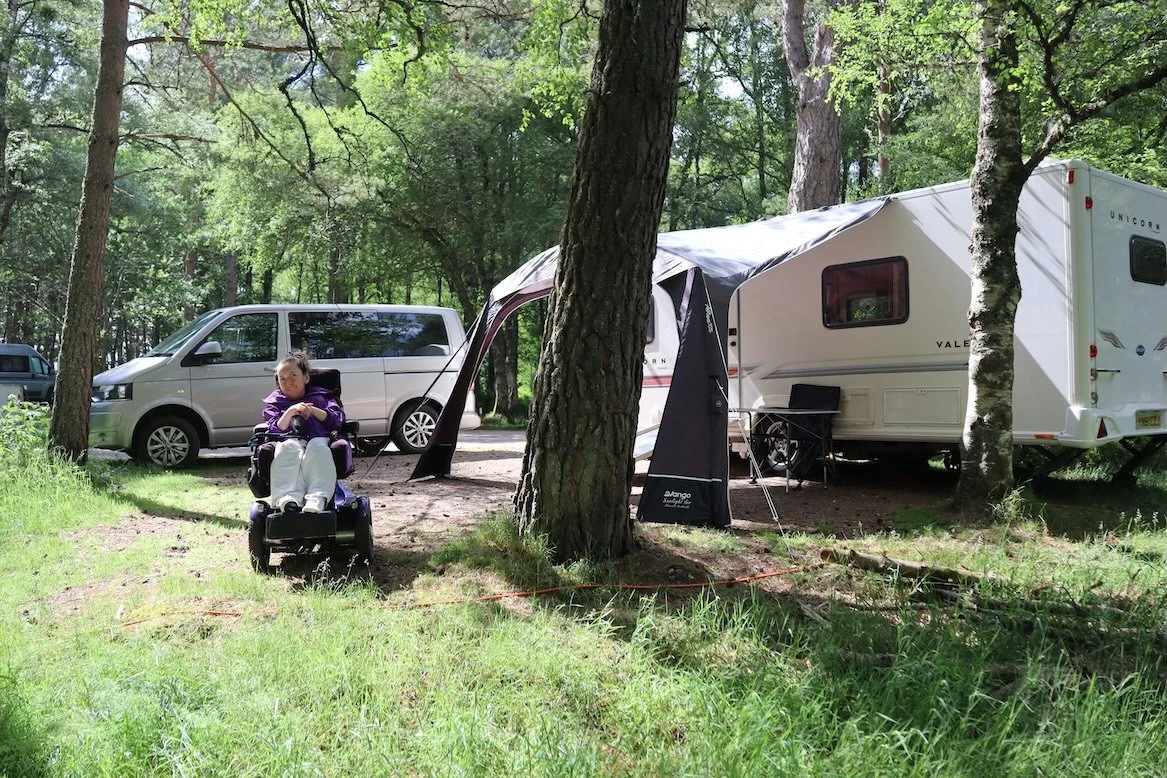
Set in an ancient Caledonian forest on the edge of Loch Morlich, a wave of relaxation washed over us as soon as we arrived.
It’s a fairly large campsite, spread out across different sections, and attracts a wide range of campers, from tenters on an adventure-holiday, to caravanners looking for a relaxing break, and everyone in between. But despite it being fully booked, it didn’t feel busy at all.
The top of the site is more open, with views of the surrounding peaks, while we found our pitch nestled deep in the woodland, immersed in pine and birch. From here, it was less than a 2-minute walk through the trees to my personal highlight of the site, the beach. Not just any beach — the highest in Scotland. And it was paradise!
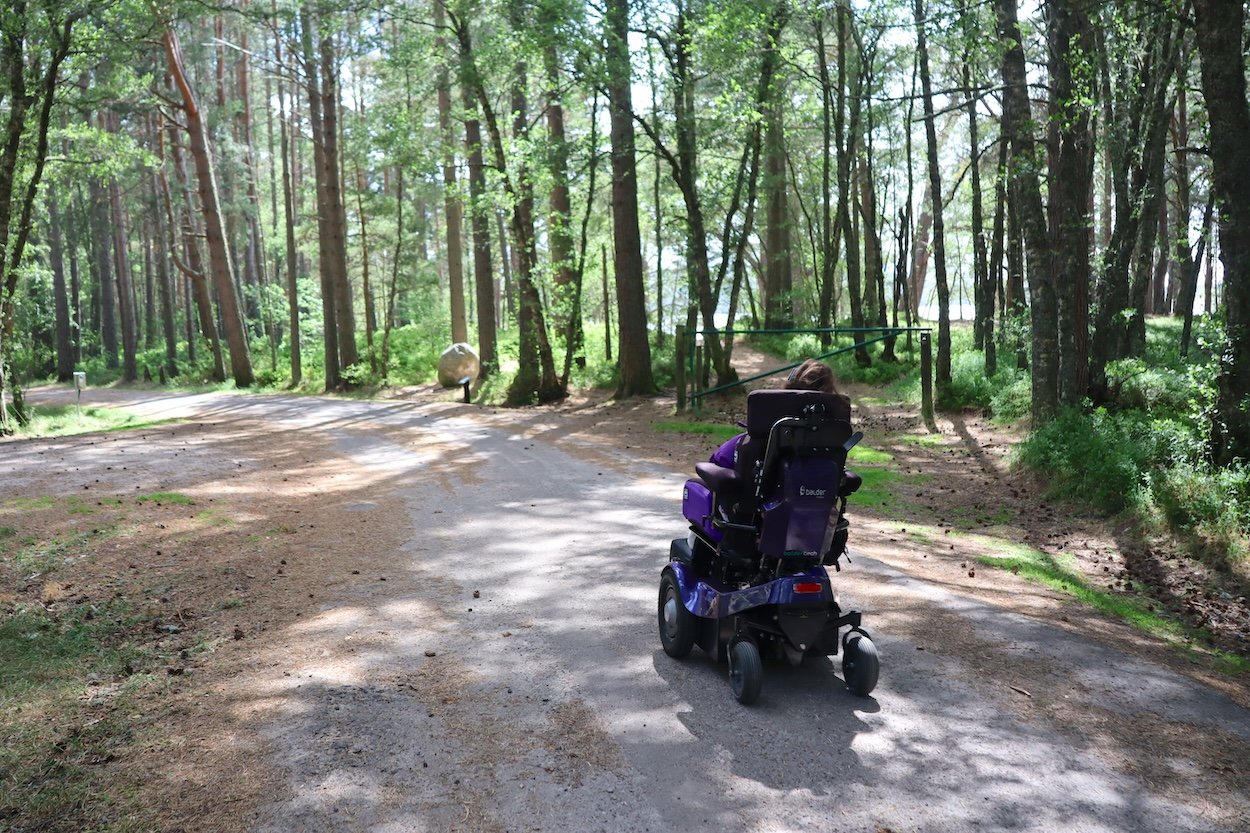
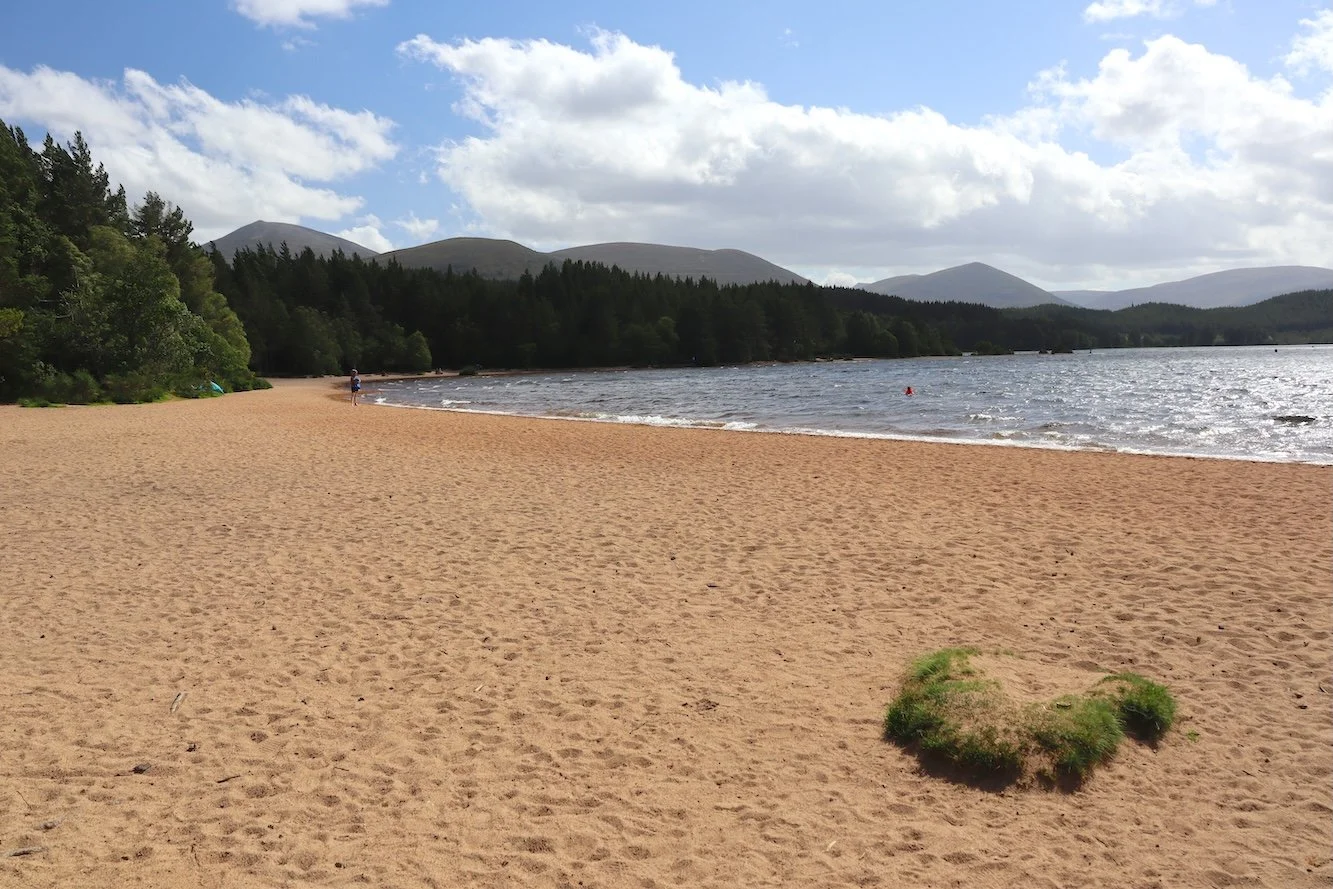
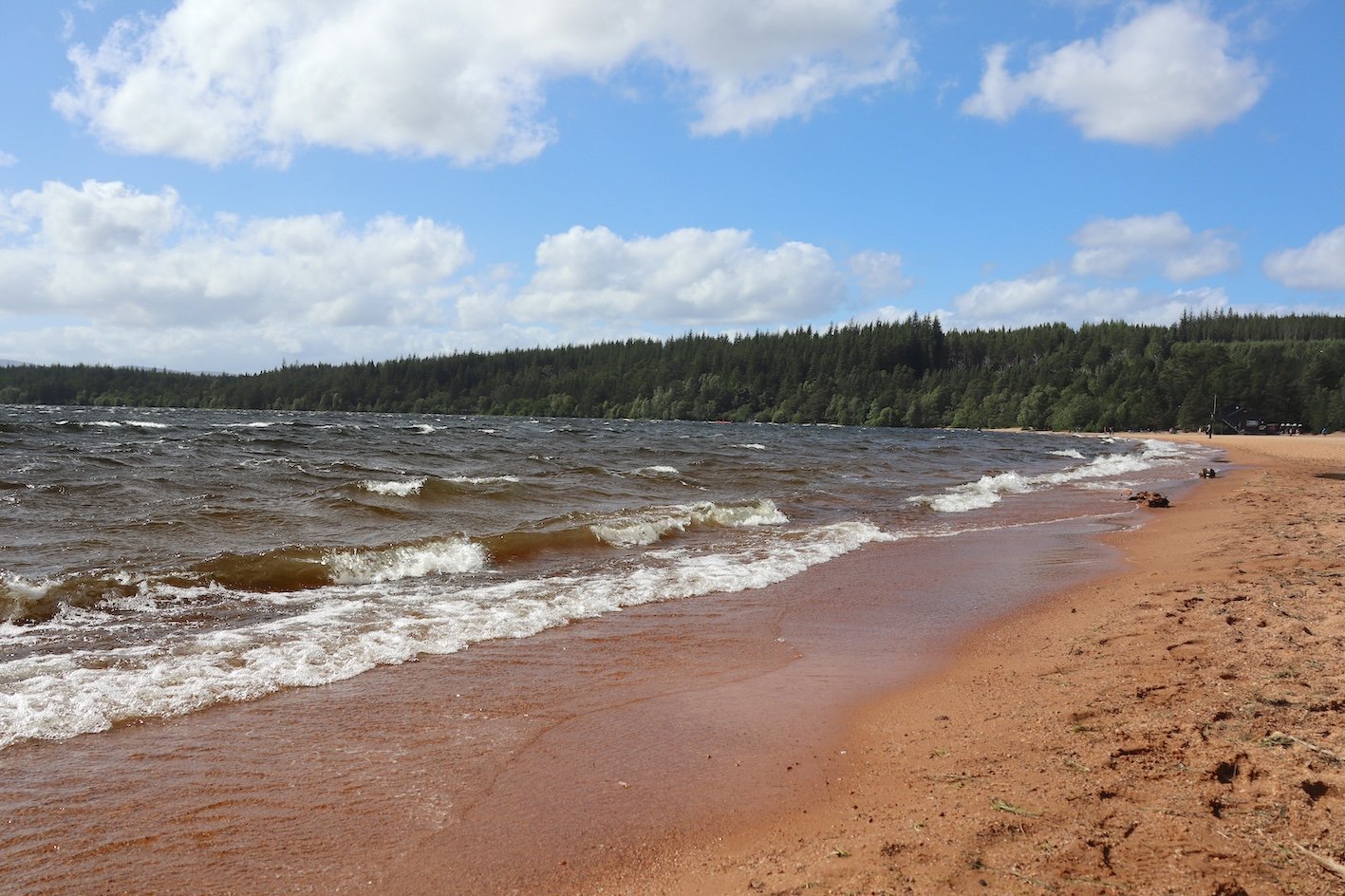
The sand was firm enough for my wheelchair to get about halfway down, and the views from there were spectacular. Rich forests surround the loch, backed by towering green hills.
It’s difficult to describe the peace we felt as we sat in silence together, breathing in the fresh air and watching the water gently lapping at the shoreline. We loved it so much that wandering down to the beach became our nightly routine for the duration of our stay, and I’m sure it contributed to some great nights of sleep.
While it’s not the cheapest campsite we’ve ever stayed on (we paid about £50 per night for a slightly more premium pitch), it’s a fraction of the cost of any nearby hotel, and in my opinion, was worth every penny. It had a real “holiday resort” feel, and had all the benefits of a remote escape, while still being in easy reach of amenities and in prime position for exploring the area, including forest trails directly from the site. All of this combined, earns it a spot on our list of favourite campsites of all time!
The Best Driving Route in Scotland
Waking up under dappled sunshine and birdsong, we were looking forward to our first full day of exploring. As many of you know, we think scenic drives are a fantastic way to discover a new destination, so when we heard about The Snow Roads, described as “one of the best driving routes in Scotland”, of course we had to give it a go.
This route is not only one of the best, but it also covers the highest public roads in Britain, offering breathtaking views throughout its 90-mile journey. We didn’t do the whole thing, but the 65 miles we covered made for a highly memorable day…
Driving Scotland’s Snow Roads
Setting off in a comfortable 23ºc, we cruised along the smooth, winding roads, taking in the ever-changing views. Deep, dark forests gave way to rocky rivers, and before long, we began to climb. The hillsides also provided variety, with some draped in purple heather, some dotted with woodland, and others giving the illusion of a sleeping giant, cosy under a green velvet blanket.
At its apex, the road reaches an altitude of almost 2200ft. Here we found the Glenshee Ski Centre, with chairlifts running up the hill, eagerly awaiting the winter sports season, but looking slightly out of place on this warm summers day.
That was just one of the many places we stopped off at along the way. As well as ski centres, cafes and viewpoints, we discovered a variety of art installations that encourage you to stop and enjoy the landscape through an artist’s eye. Our favourites included Still, The Watchers and Connecting Contours, which were all located on the roadside, with mesmerising views.
Finding the Centre of Scotland
Having driven hours from the campsite, we had a bit of a trek to get back. However, we couldn’t do so without ticking another item off our “geographical extremes” bucket-list. So far we’d conquered Scotland’s most northerly and most southerly points… Now it was time to visit its most central!
A small diversion took us to the middle of nowhere—well technically, the middle of Scotland—where a giant boulder with a plaque marks the spot. It’s not quite as “showy” as the other landmarks—there are no cafes, shops or exhibitions—just a large rock perched in a peaceful spot in the countryside, seemingly miles from civilisation. It felt great to tick it off the list.

Travelling Back Through Time
After the previous days antics, we were looking forward to staying a bit closer to home. Although we only drove 20 miles, we ended up travelling 300 years back in time. Our destination? The Highland Folk Museum!
If, like us, you enjoy an immersive experience, then you will love this fantastic open-air museum. And “open” really is the word! Spread across 1 mile, there are more than 35 buildings to explore, dating from the 1700’s to the 1950’s. Warmly greeted by Gordon, an enthusiastic member of staff who could talk for Scotland, we learned how the majority of the buildings had been painstakingly relocated there from all across the Highlands. We also heard how some visitors had returned to see the very shops, schools, and homes they’d once known, now preserved in this living time capsule — How cool is that!?
Top Tip: Wear comfortable, weather-appropriate clothes/shoes and make sure your powerchair batteries are fully charged, as you will cover a fair distance throughout your visit, and will be outside for the majority of it.
Keen to take a look for ourselves, we began at the furthest point, where the oldest buildings lie, in The Township. To get there, it’s roughly a 1km walk through a pretty wooded area called The Pinewoods, along a pressed gravel track, but it’s totally worth it!
The Township
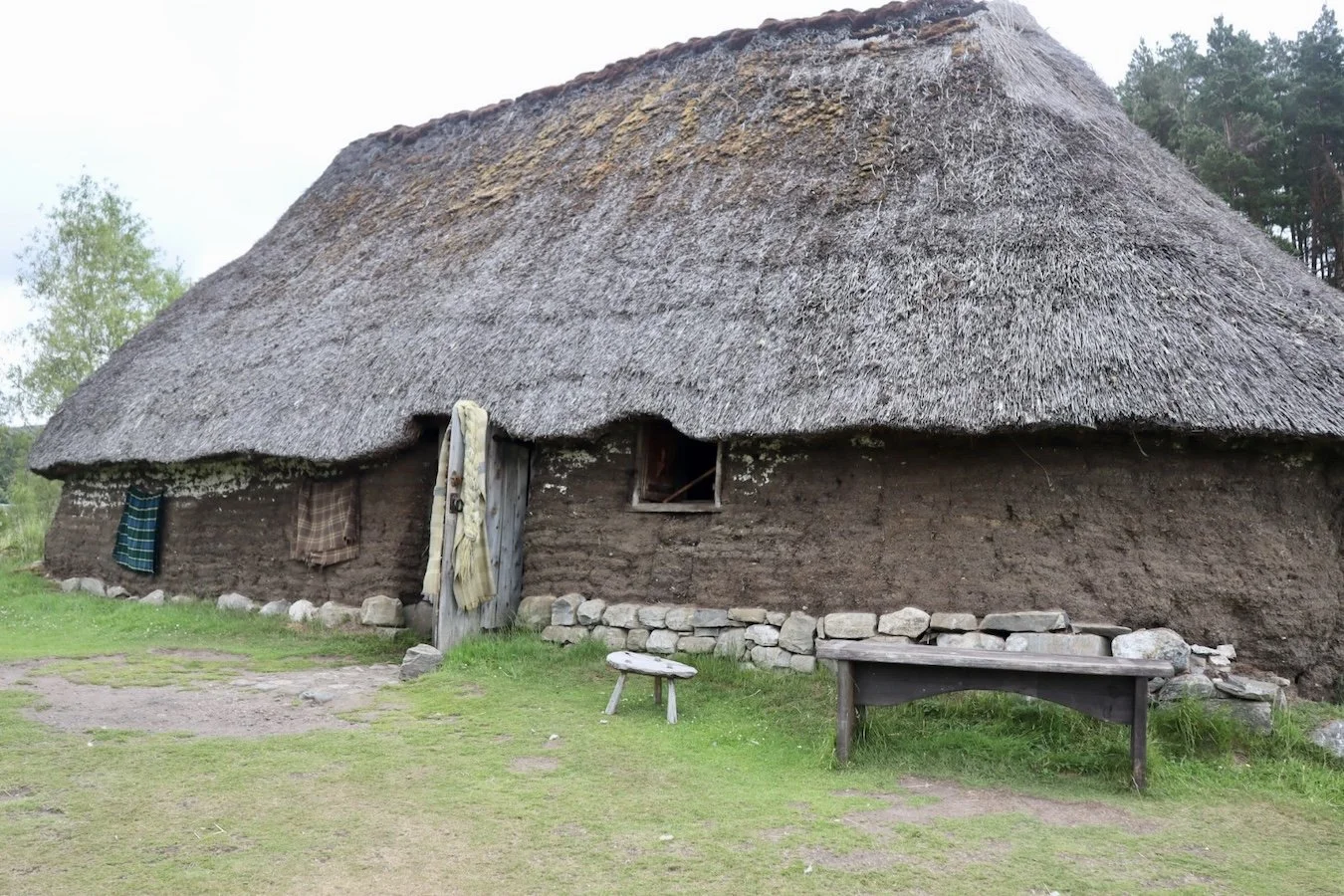
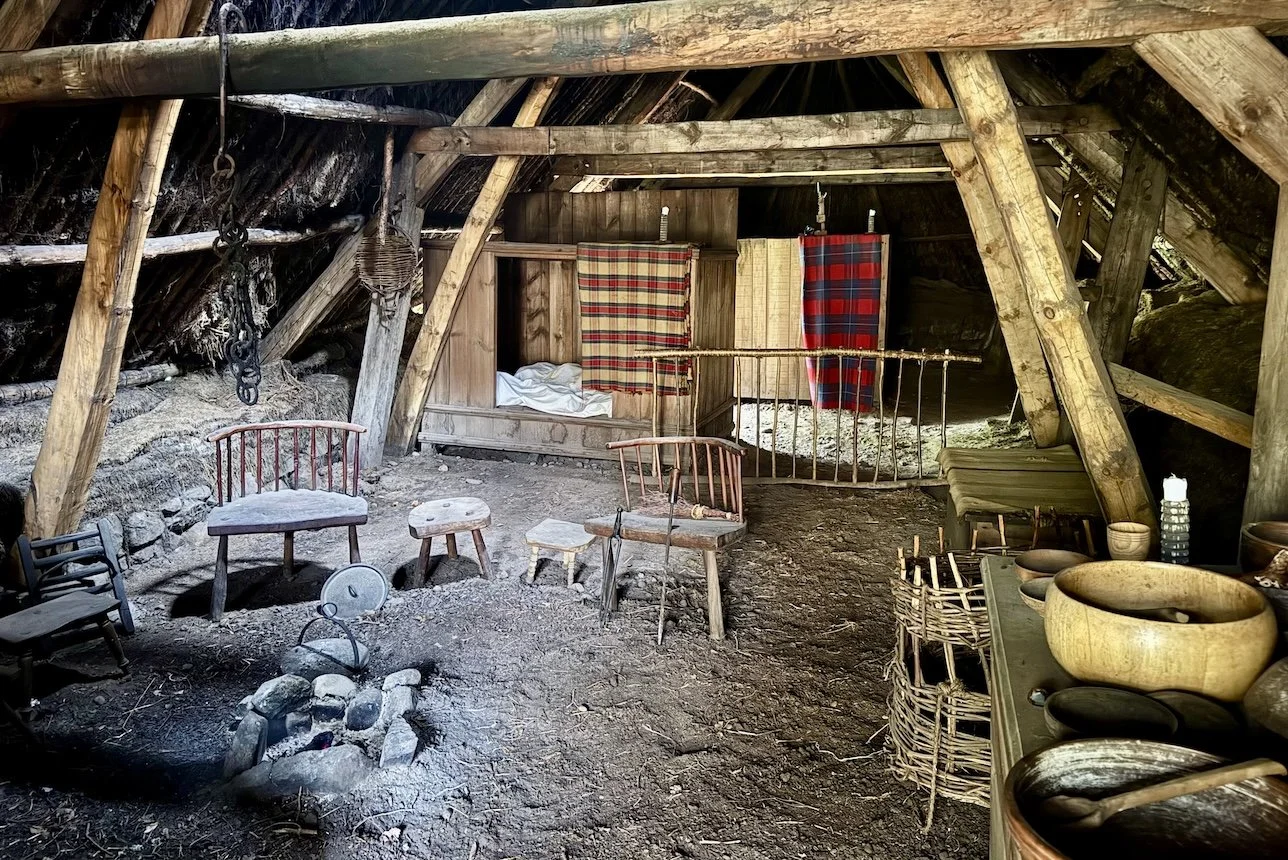
Because of their age, this is the only part of the museum with replicas, rather than the original buildings, but it gave us a really good idea of what life was like in the 1700s. Each building has turf walls and thatched roofs, and just being there sent us back centuries. In one, a peat fire was constantly burning low, filling it with a rich, earthy scent. We learnt that this was a common practice in those days, to keep the walls and roof dry and create smoke that helped to preserve meat and fish. How different things were before the days of central heating and refrigerators!
Middle Village
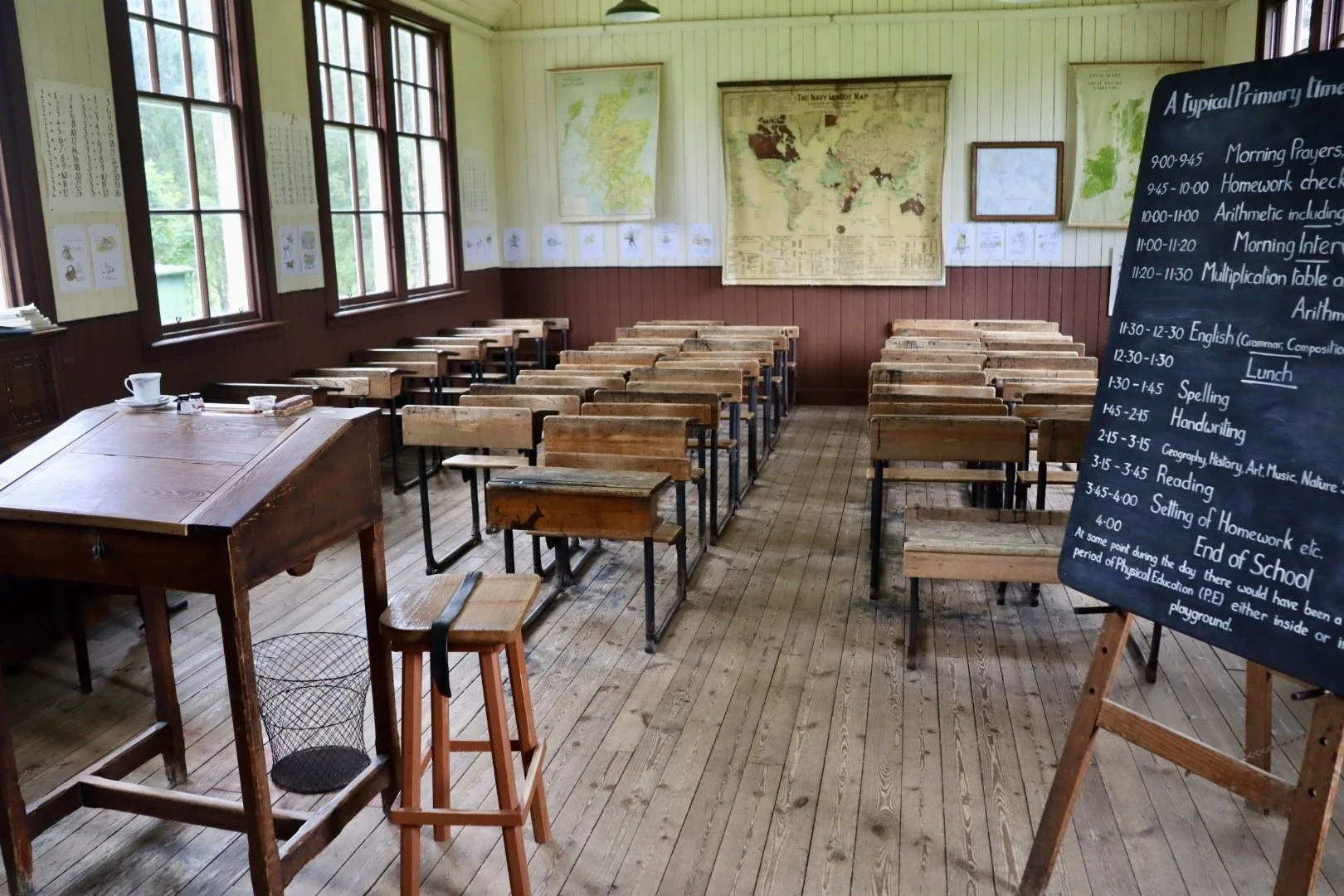
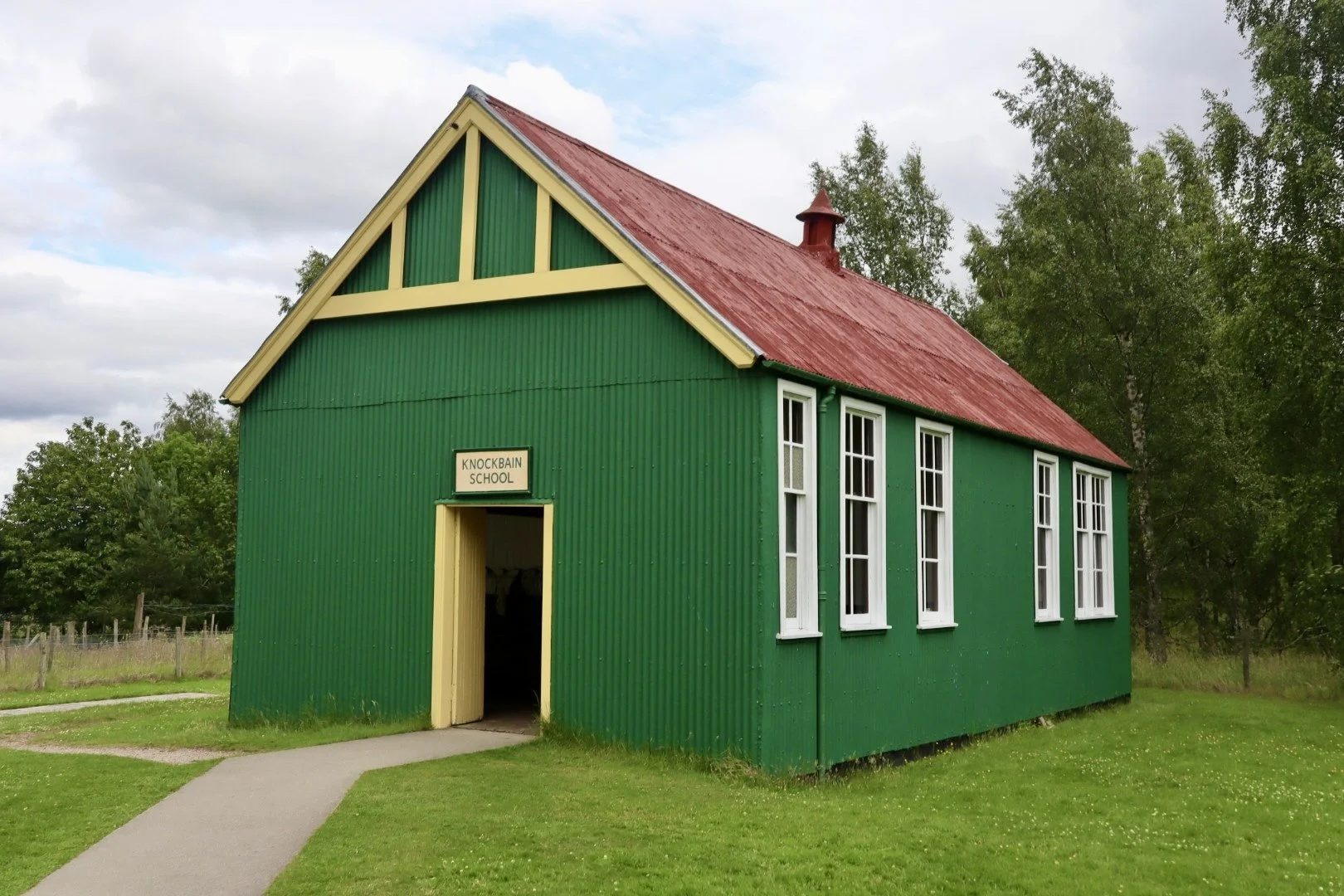
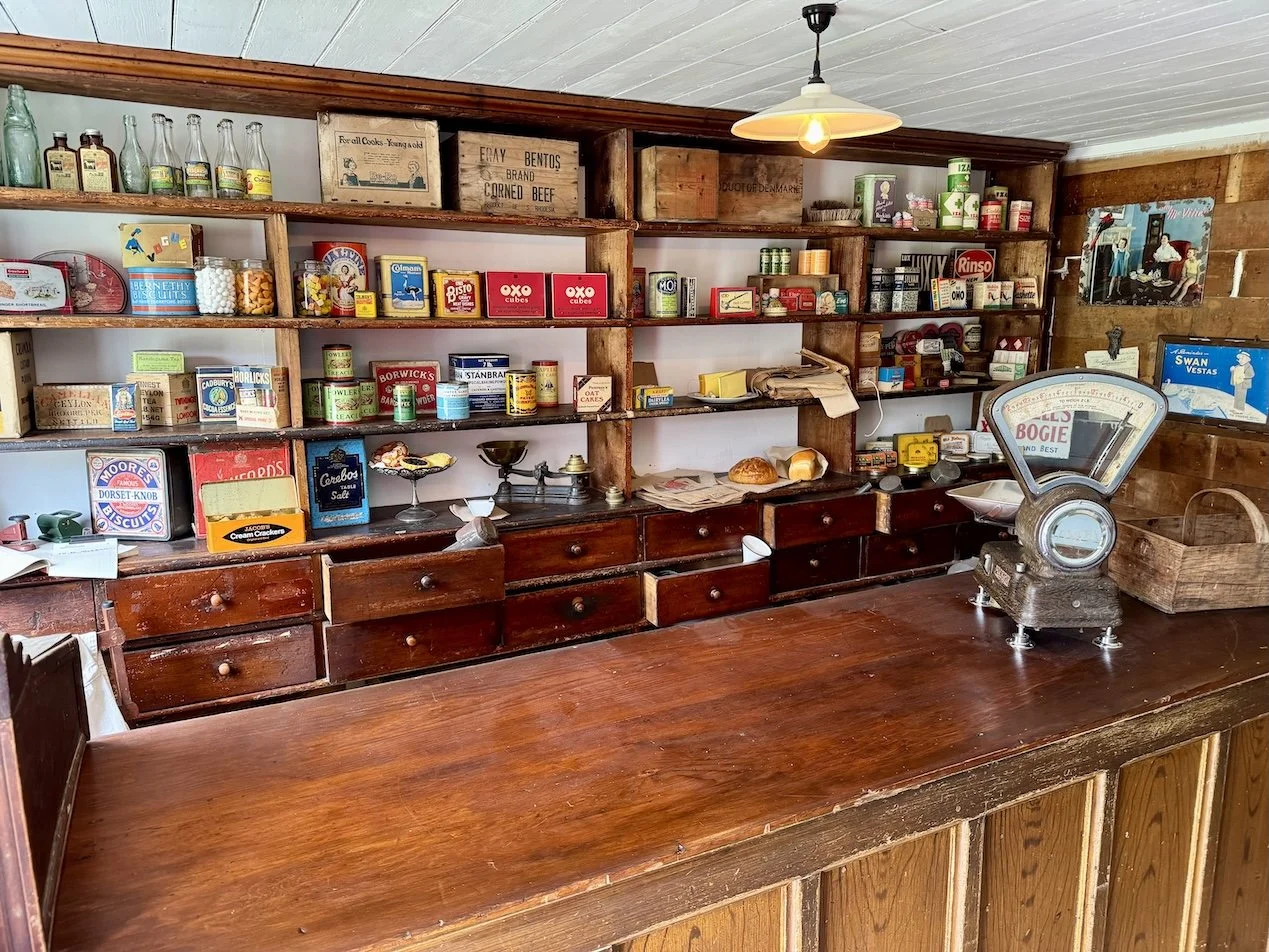
Heading back into the central hub of the museum, we discovered the Middle Village, which brought us forward a century or two. My favourite buildings here were the 1950s school, complete with a blackboard and a belt (for those troublesome students), and the old village shop, which belonged to a time when you had to ask for each item from behind the counter.
From a post office, sweet shop and clockmakers, to a tailors and more, there was so much to see. It’s unbelievable to think that people actually lived and worked in these very buildings. While I couldn’t access them all in my wheelchair, I was pleasantly surprised by the amount I could!
Aultlarie Croft
Ending our visit at the Aultlarie Croft, we got a taste of rural, farming life through the ages, and saw the cutest trio of Highland cows, or ‘coos’, who were no more than a few years old. It was the perfect way to end such a fun, interesting and thought-provoking day. Each building has a story to tell, and it felt like a privilege to hear them.
The Most Wheelchair Accessible Mountain in Scotland
The following day we were keen to continue the adventure, with something we had been looking forward to all week — a trip to the top of the Cairngorm Mountain!
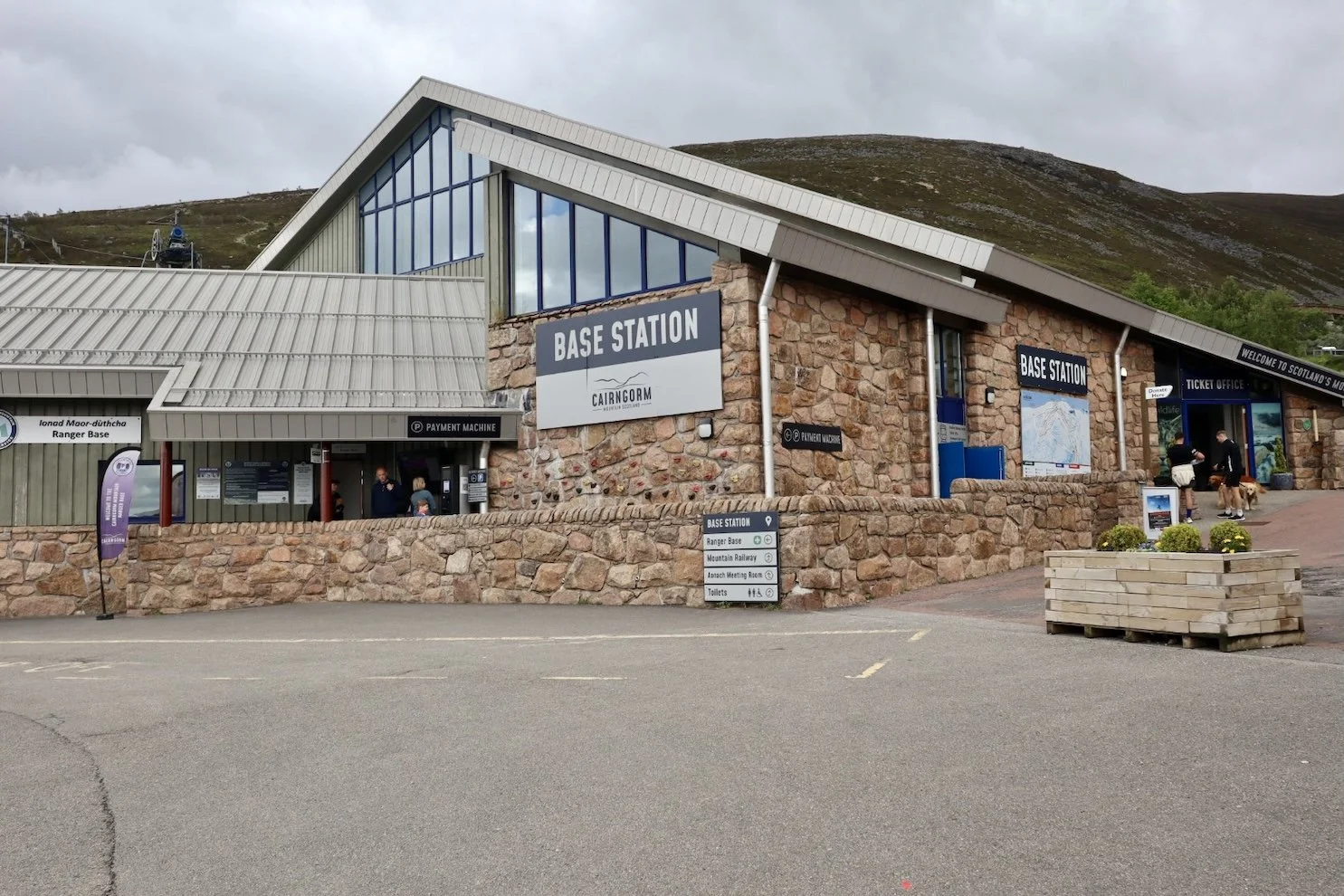
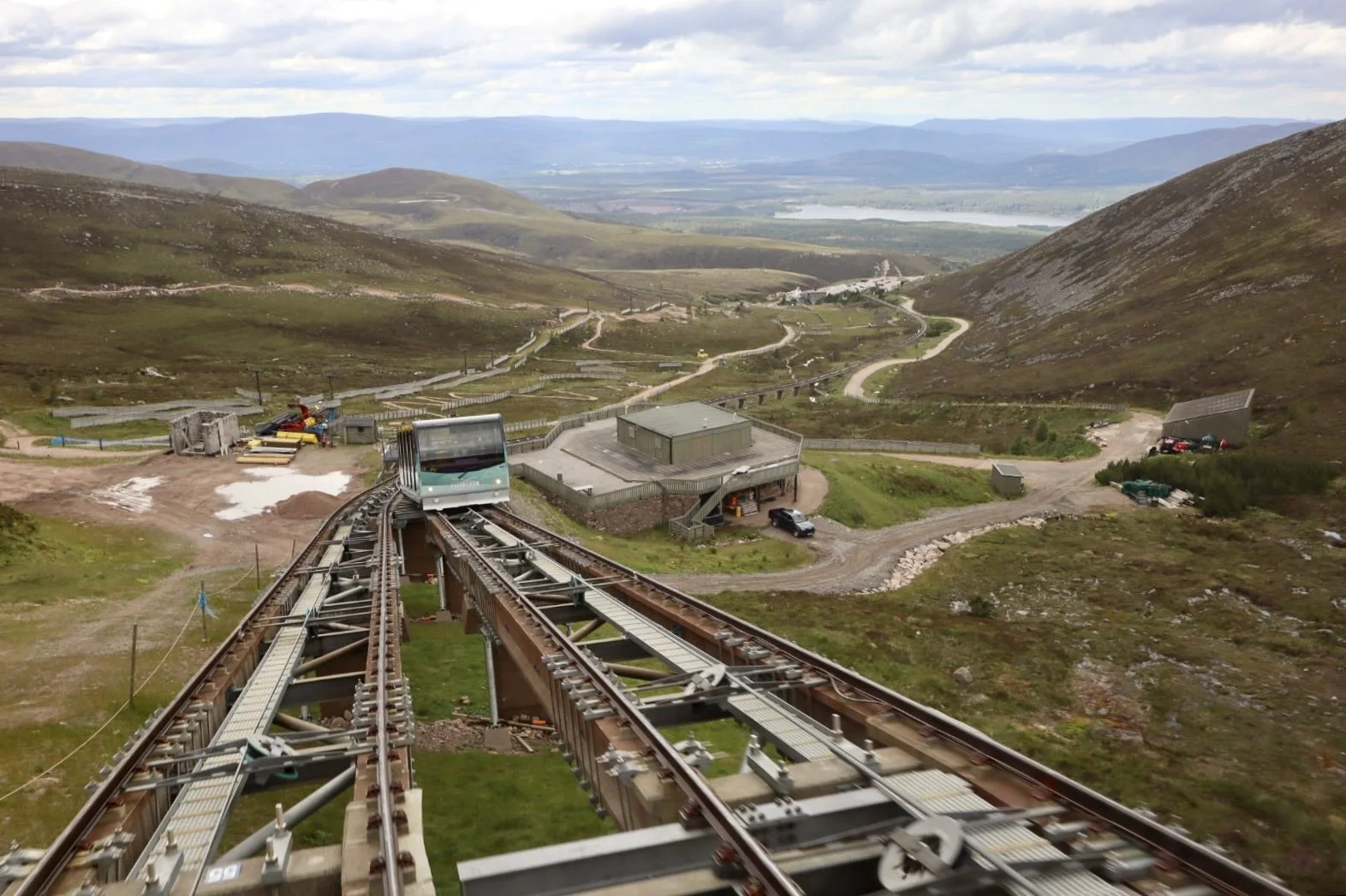
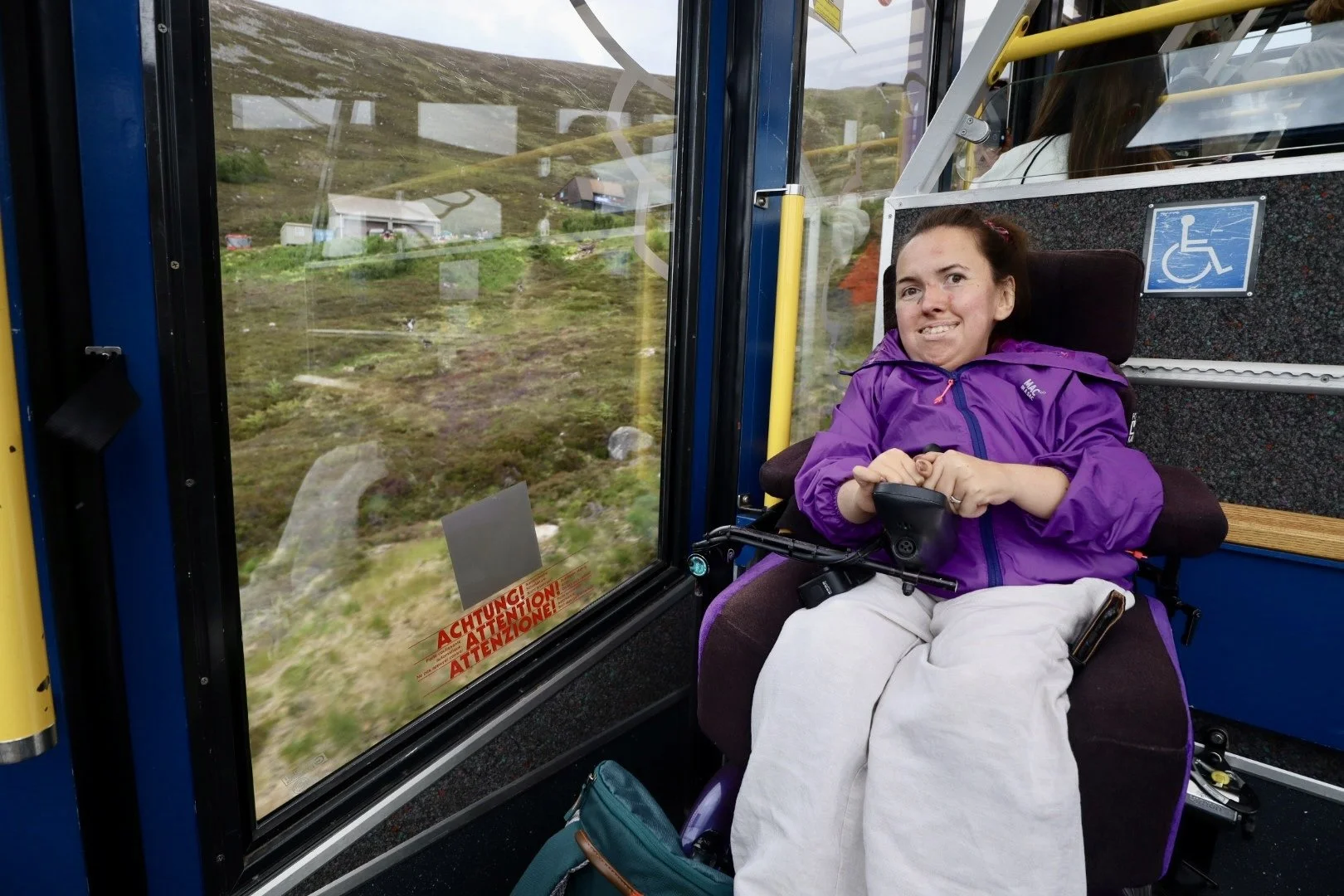
With the base station only a 10-minute drive away, we arrived in good time and eagerly made our way to the ticket office for the funicular railway. Trains running every 20 minutes, meant we didn’t have to wait long before we boarded and started to ascend. Eeeeek!
1000ft… 2000ft… 3500ft… The views through the wall-to-wall windows only got better the higher we got. After 8 minutes of this, and a running commentary telling us about the mountain and its history, we arrived at the top and headed straight to a lunch we will never forget.
Lunch in the UK’s Highest Restaurant
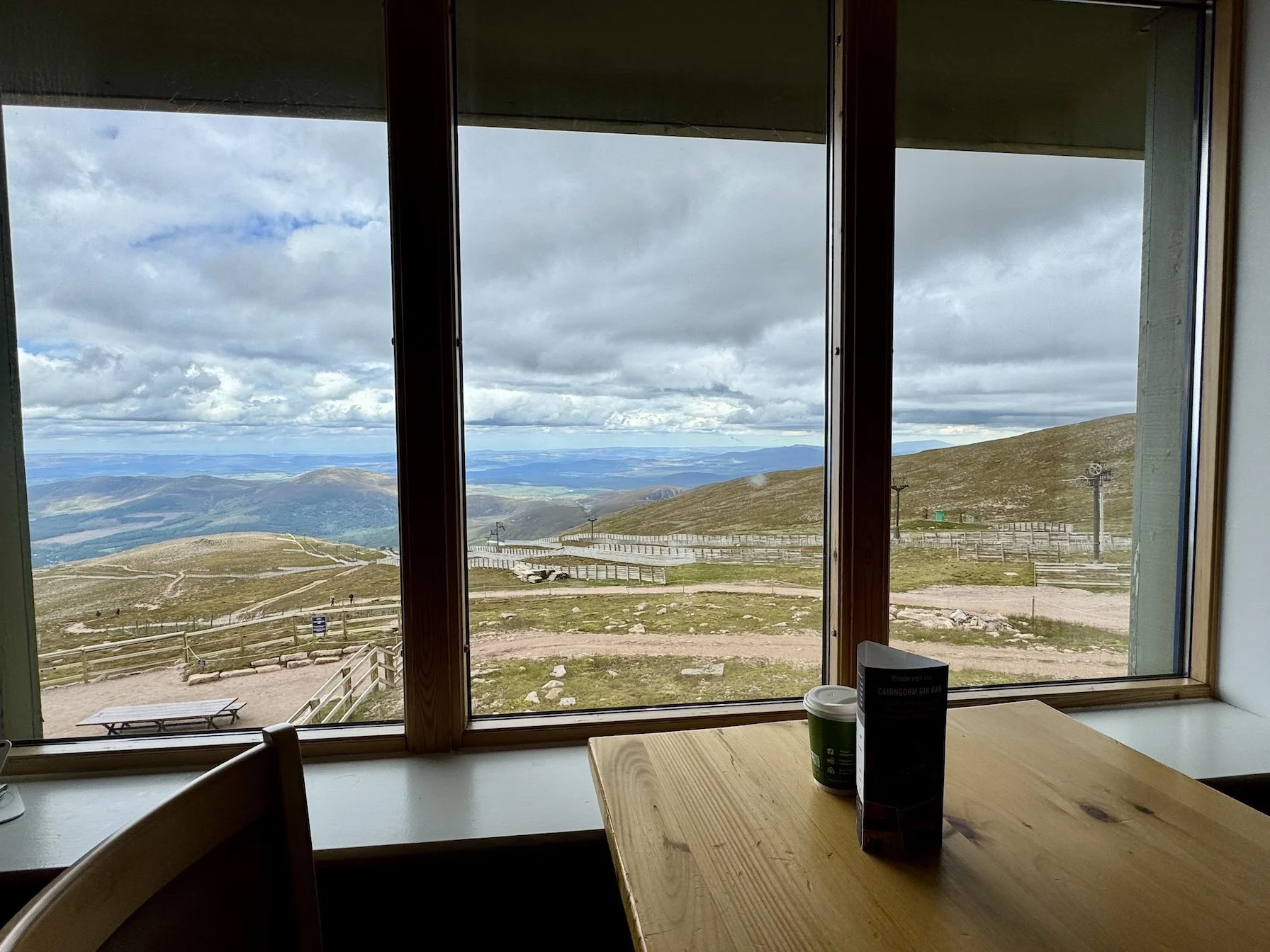
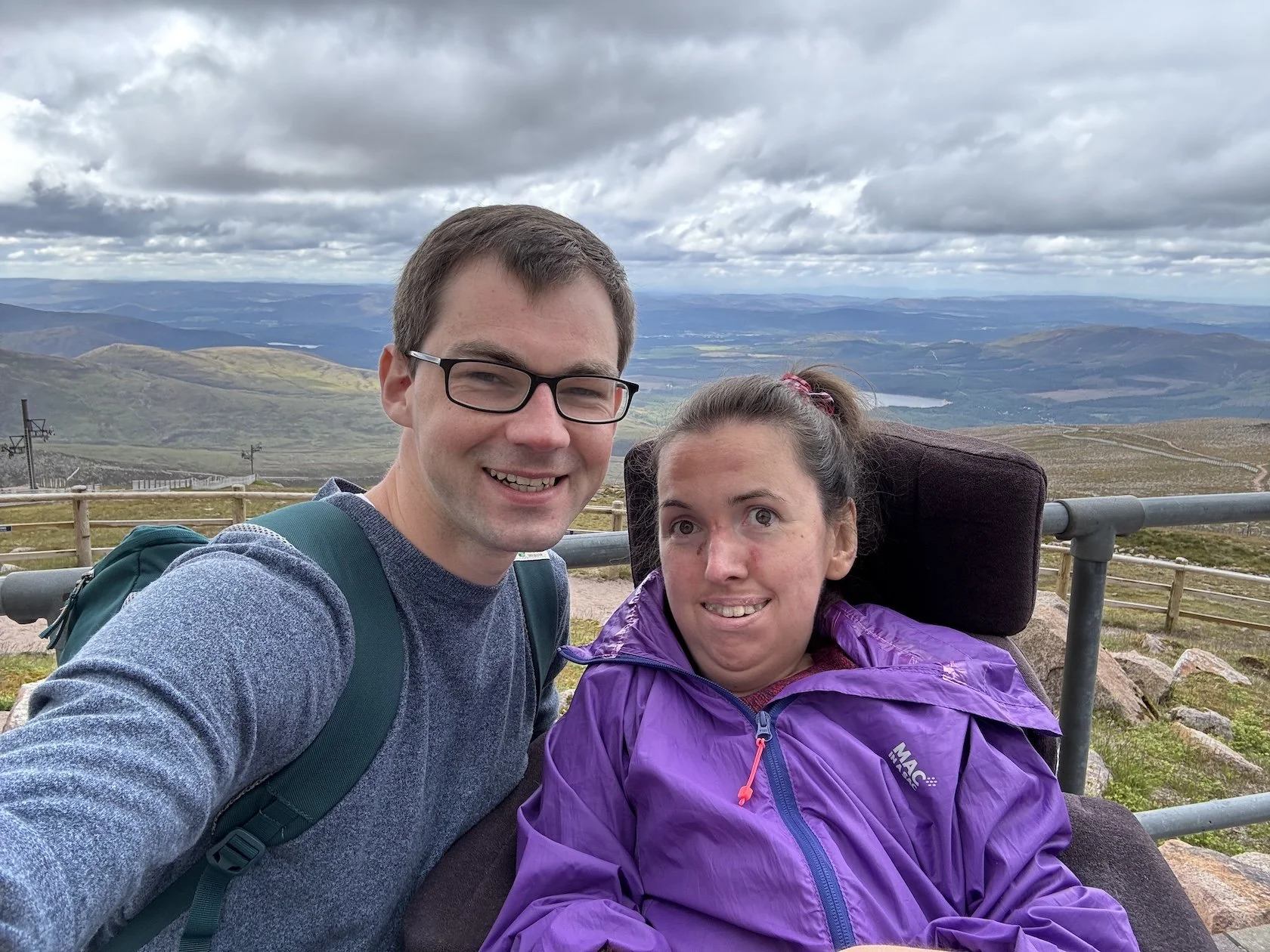
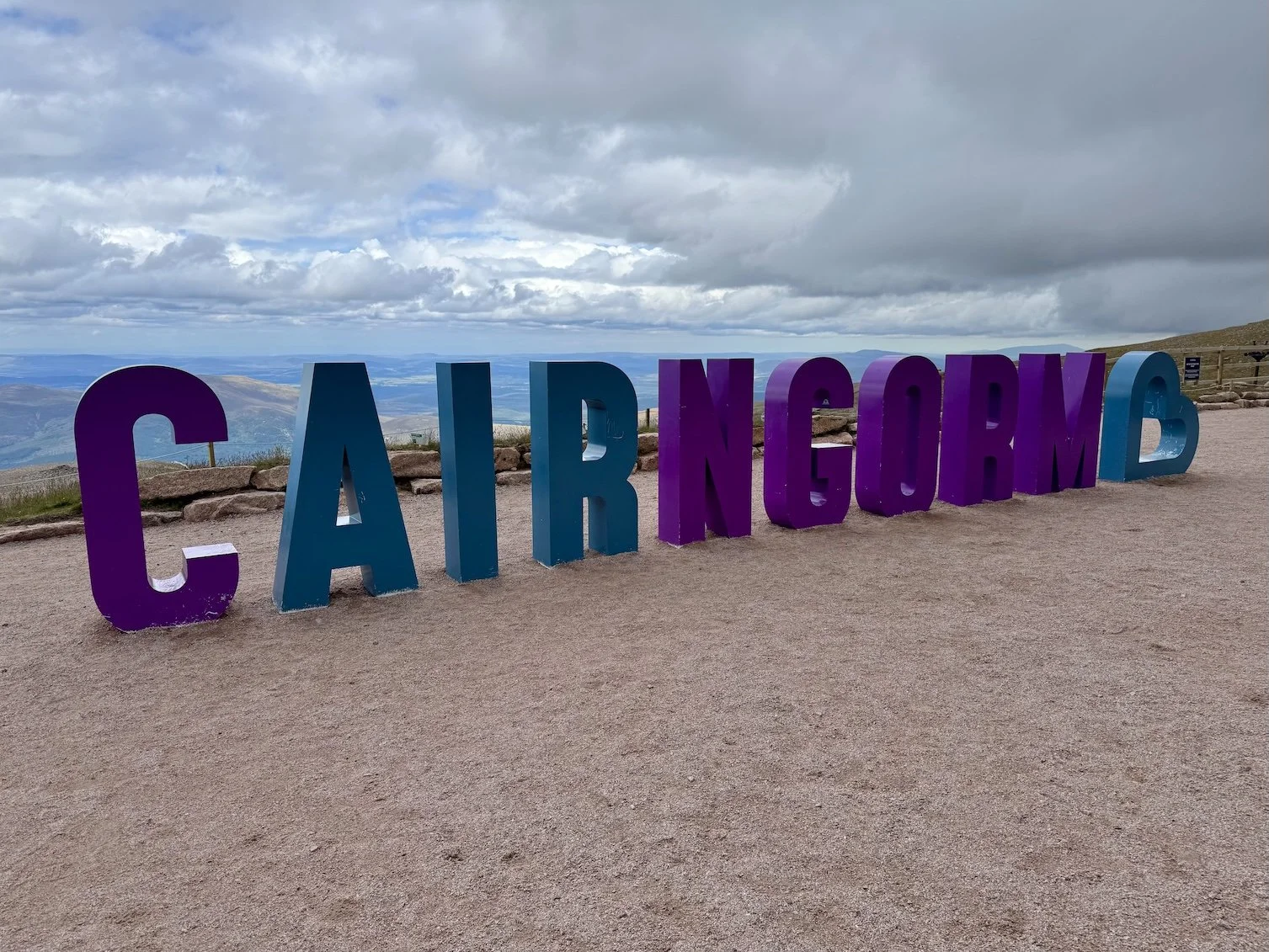
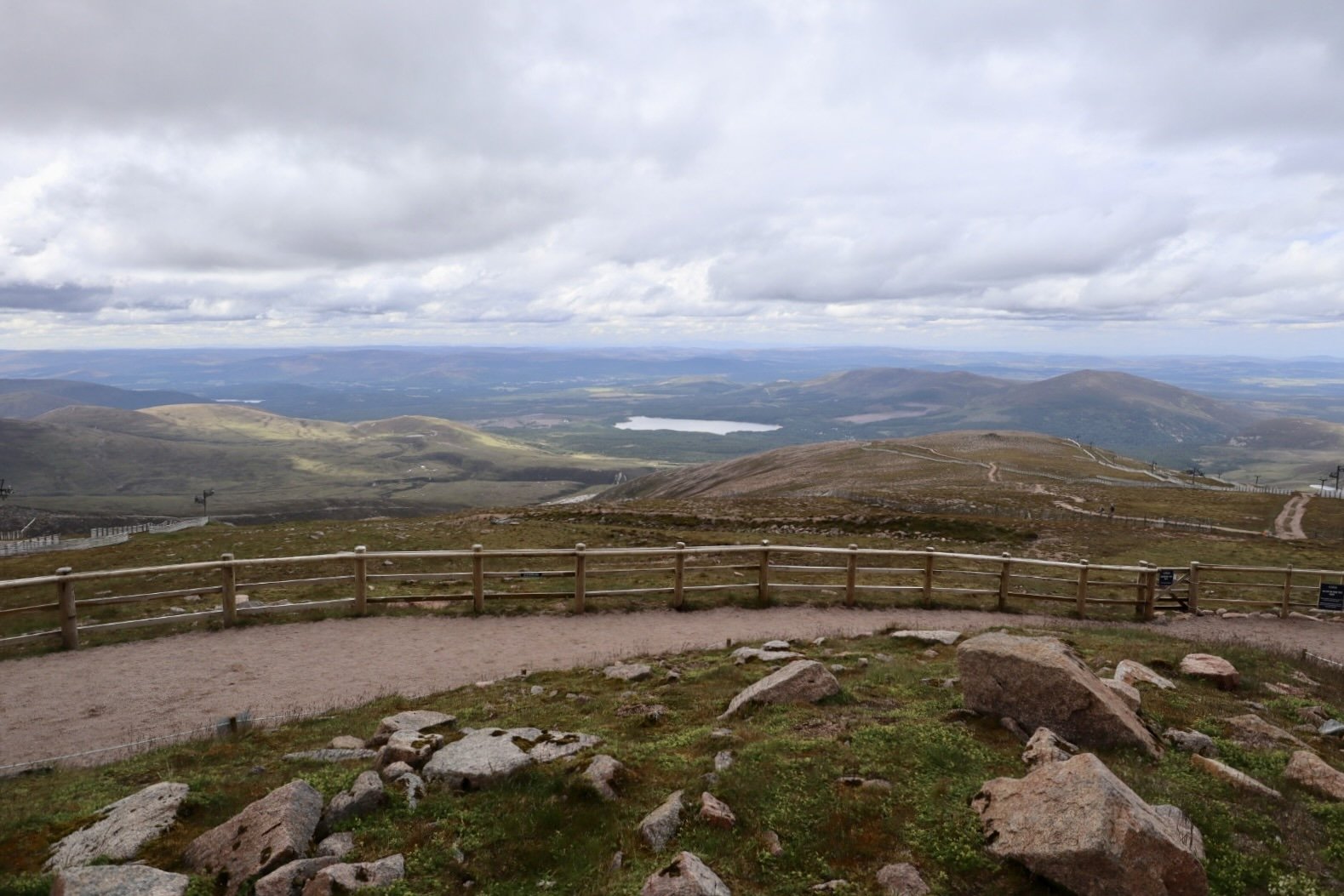
The Ptarmigan Restaurant, otherwise known as the highest restaurant in the UK, sits at an altitude of over 3500ft, with breathtaking views of the surrounding landscape that just seems to fall away beneath it. Sitting at a window table, it was hard for our brains to process that we were actually looking at that view with our own eyes—it wasn’t a photograph or TV screen. Minds = well and truly blown!
After enjoying a beef goulash, and the 270º immersive film in the exhibition downstairs, we stepped outside onto the terrace and it all began to feel a bit more real. The temperature up there was a cool 5ºc, with some of the freshest air we’ve ever inhaled. Thankfully the rain held off, and we enjoyed panoramic views as far as the eye could see, pointing out landmarks that we recognised, including Loch Morlich Beach, where the caravan was pitched. It’s said that on a clear day you can see up to 80 miles!
The experience was every bit as exhilarating as we hoped it would be.
Wheelchair Accessibility at the Cairngorm Mountain
I have to say that I was super impressed by the accessibility at the Cairngorm Mountain! I was a bit apprehensive beforehand, but as it turns out, I had absolutely no reason to be. There was ample parking (which is free to Blue Badge holders) at the base station, and lifts in place of stairs. Boarding the funicular railway was an absolute breeze, with a threshold ramp put in place, and fold-up benches that create space for multiple wheelchair users, while still enabling you to travel with your companions (carers can travel for free). They even have optional wheelchair restraints — not that they’re needed, as it’s such a smooth and gentle ride.
At the top, there are lifts or level access to every area, including the viewing deck. There are also accessible toilets both at the top and down at the base station, and we found the staff to be incredibly friendly and helpful. All of these minor details add up, and made a big difference to our overall enjoyment!
The Mystical Green Loch
Another highlight of Glenmore Campsite is the amount of walking and cycling paths surrounding it. As well as trails around Loch Morlich and into Aviemore, just opposite the site entrance is the Glenmore Forest Park Visitor Centre, which is the starting point for even more.
With our final day upon us, we fancied immersing ourselves even deeper into the forest, with a wheelchair-friendly hike. Optimistically ignoring the threatening skies, our aim was to reach Loch Uaine, otherwise known as The Green Loch, just under 2 miles away.
Beginning at the Visitor Centre, we followed the blue way-marked trail into the woods. It was a warm, humid day, with dark clouds looming overhead. A storm was brewing, but that wasn’t going to stop us!
Tall pine trees towered over the forest path, which was easily manageable in my powerchair, and took us alongside a babbling stream, crossing over it at various points. Aside from a couple of people we crossed paths with, it felt as though we were the only two people on the planet—oh, and an array of birds, butterflies, bees, dragonflies, and even a tiny little shrew, which we spotted along the way.
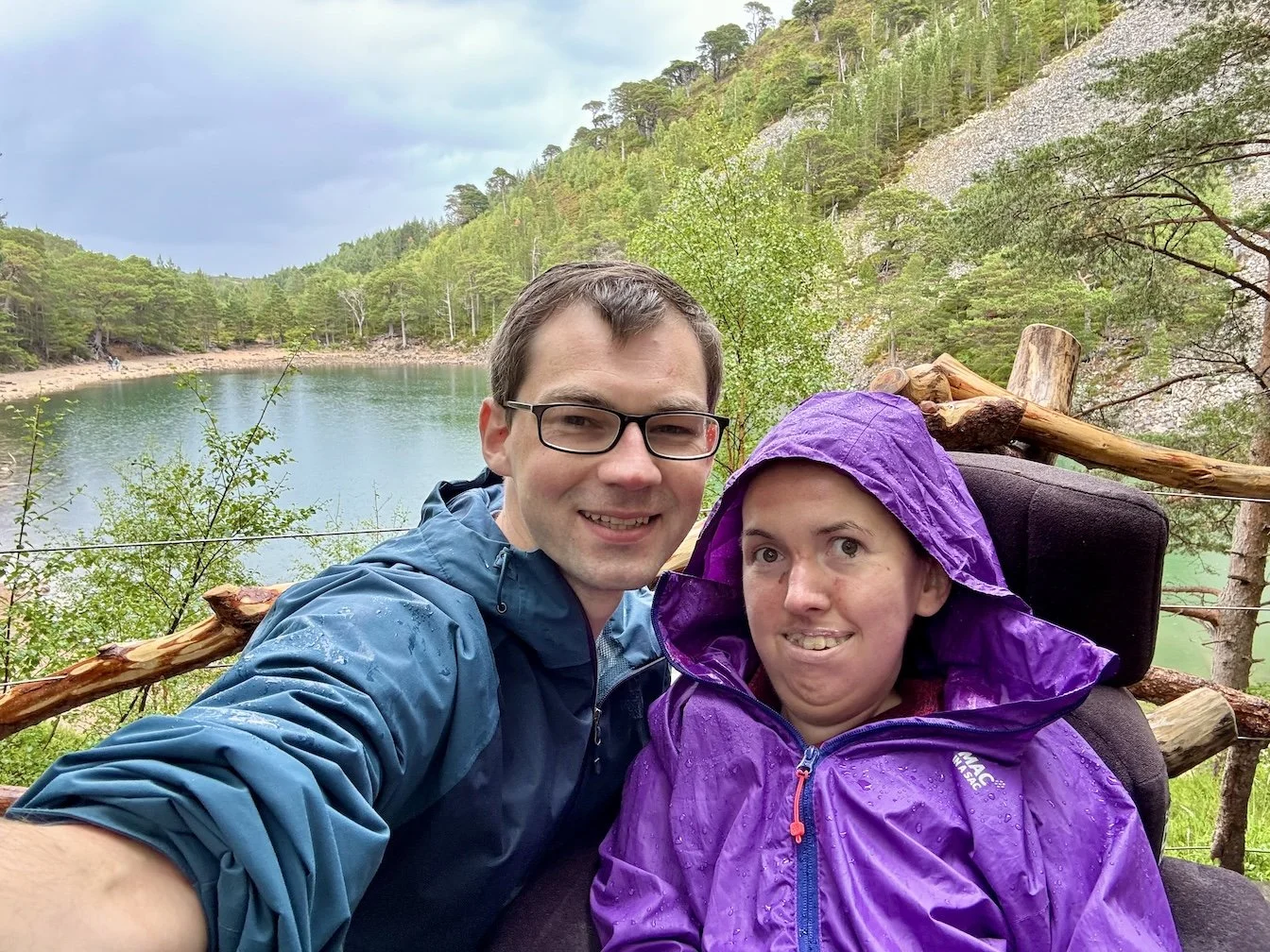
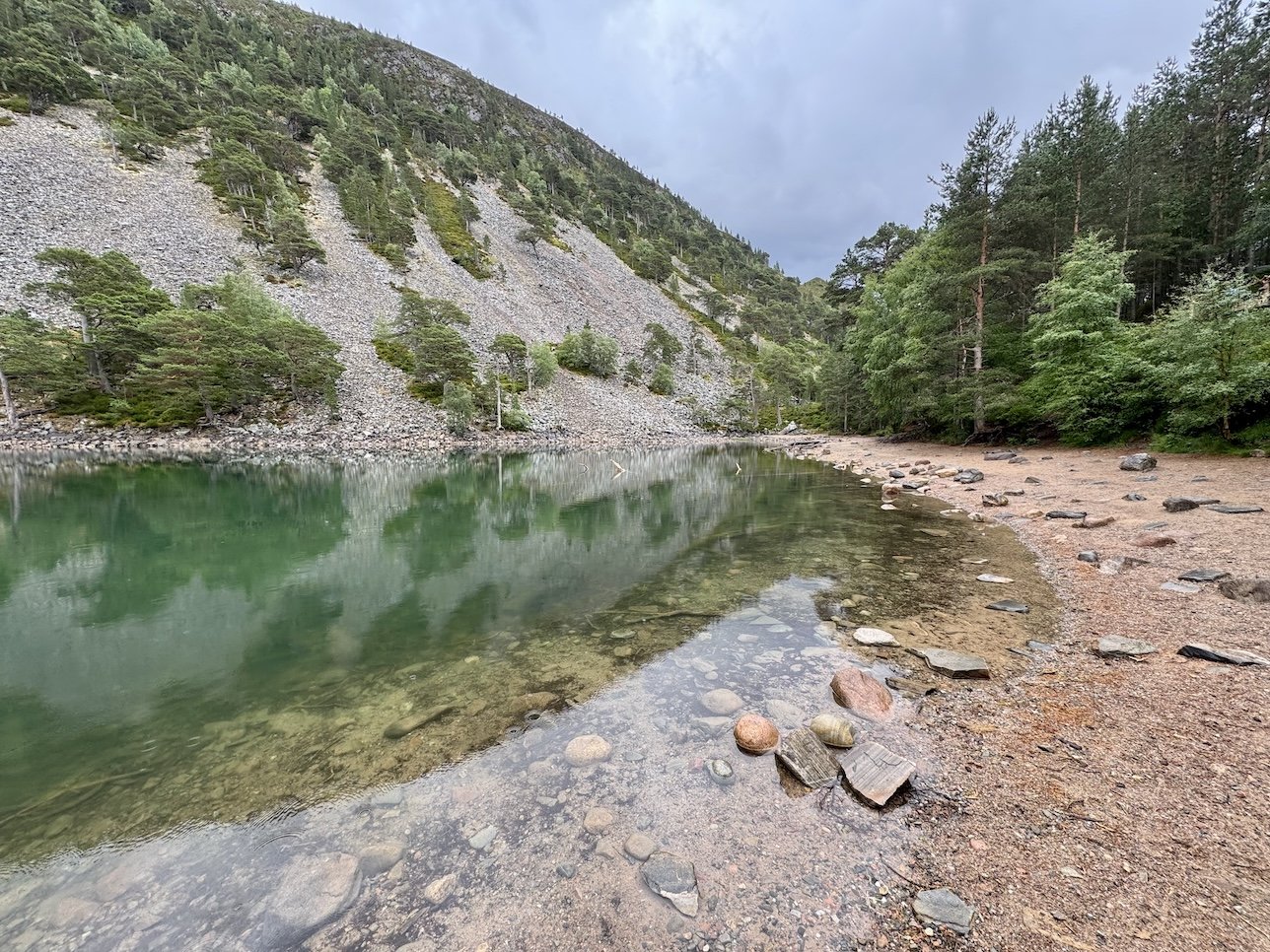

After about an hour, we arrived at The Green Loch — and WOW! The photographs don’t even do it justice. Trees parted to reveal mystical emerald water, with an accessible viewing platform so we could take it all in. Some say the water gets its colour from the algae, others say it’s a reflection of the surrounding trees, but legend has it that it’s from fairies washing their clothes in it. I choose to believe the latter, and when the heavens opened up as soon as we arrived, the raindrops created tiny fairy footprints across the waters surface.
By now, the storm had found us. Sheltering beneath natures umbrella, a bushy birch tree, thunder rumbled and rain pitter-pattered around us, only making the dramatic atmosphere even more magical. Despite the weather, we were having the best time. We would have happily driven for miles for this walk—to experience this moment—but the fact that we walked from our pitch is a huge bonus!
This, and everything else we discovered over the course of our trip, makes the Cairngorms one of our favourite parts of Scotland. We’d reached new highs—quite literally. We’d driven the UK’s highest road, ate at the highest restaurant, and relaxed on the highest beach… and it’s going to take a while to come down from it all.