
Towing with a Wheelchair Accessible Vehicle (WAV) in the UK: How We Do It & Key Things to Consider…
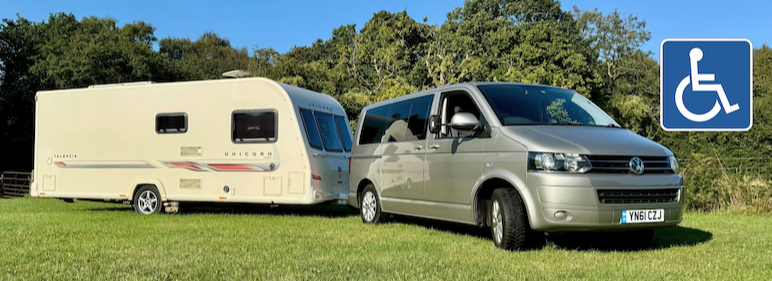
Towing with a wheelchair accessible vehicle (WAV) is something we’re asked about from time to time. Whether it’s a caravan, trailer or small boat, it’s important to know the right type of WAV to get in order to be able to tow.
In this article, we’ll explain how towing can work with a wheelchair accessible vehicle, the key things you need to be aware of, and how we personally do it with our own setup – written from our own real-world experience.
We’ve heard misinformation in the past, which has spurred us on to share our insights into this topic, having owned a WAV and towed tens of thousands of miles with it – Check out our blog or YouTube channel to see some of our #AccessibleAdventures
This article is specifically about WAVs that are permanently adapted to allow a wheelchair user to travel in their wheelchair (via a ramp or lift). This is not about standard mobility vehicles or unadapted cars, including those supplied through schemes such as Motability. We also won’t be talking about tow car matching or technical towing limits etc, as that’s a whole other subject with information widely available, such as from this article from our friends at Coachbuilt.
Can You Tow with a Wheelchair Accessible Vehicle?
The short answer is: YES, but not with every type of WAV conversion.
Whether towing is possible depends almost entirely on how the vehicle has been adapted. The access method (lowered floor, ramp, tail lift or side lift) plays a huge role in whether a towbar can be fitted, and whether the vehicle remains practical to use once something is hitched up.
Lowered Floor WAVs and Towing
This is the most important point to understand: You cannot fit a towbar to a WAV with a lowered floor conversion at the rear.
Rear access lowered floor WAVs typically involve significant structural changes to the rear of the vehicle, with the ramp lowering through where the original bumper would be. Because of this, fitting a towbar is simply not possible. If your WAV has a lowered floor and a rear ramp that folds out from that lowered floor, towing is unfortunately off the table.
WAVs That Can Be Suitable for Towing
To tow with a wheelchair accessible vehicle, the WAV needs to retain its original floor height and rear structure. This type of vehicle would need to be slightly larger in order to allow a wheelchair user enough headroom to enter the vehicle. Vehicles such as the Volkswagen Transporter, Mercedes Vito or Sprinter and Renault Trafic, etc, with the right adaptation would be suitable. This generally means one of the following access methods:
1. Side Lift WAVs
A WAV with a side-mounted wheelchair lift is often the most straightforward option when it comes to towing. Because access is through the side of the vehicle, the rear remains clear for a towbar and trailer or caravan connection.
Side lift WAVs also have another major advantage when towing: rear access isn’t blocked when something is hitched up. This can be important for day-to-day usability and for emergency exit considerations.
2. Rear Tail Lift WAVs
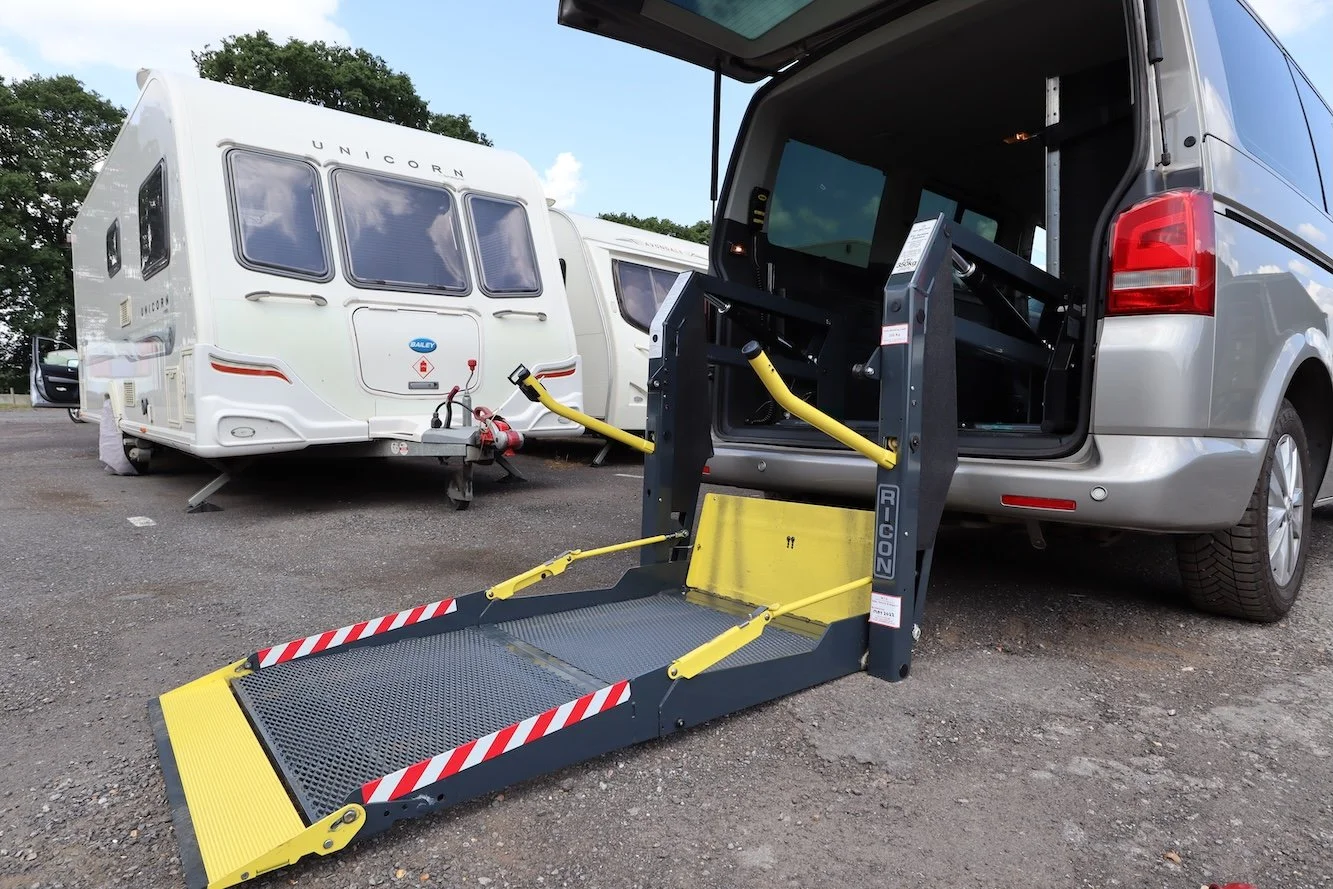
A WAV with a rear tail lift (such as our own) can work well for towing, but there is a crucial requirement: The towbar MUST be detachable.
With a tail lift, the lift platform needs to lower directly behind the vehicle. A fixed towbar would obstruct this, making the lift unusable. A detachable towbar allows the tow ball to be removed when not towing, keeping the tail lift fully functional.
This is the setup we use ourselves, which we’ll explain in more detail below.
3. Rear Ramp WAVs (Non-Lowered Floor)
Some WAVs use a rear ramp system where the vehicle floor has not been lowered. Examples include ramps such as a EuroRamp or similar systems that are mounted on the inside of the vehicle’s floor and fold out from the rear, and are often assisted by gas struts.
In some cases, these vehicles may even work with a permanent towbar – but this must be checked very carefully before installation. The critical question is whether the ramp will fully deploy and clear the towbar.
Access and Emergency Exit – A Critical Consideration
One of the biggest things to keep in mind when thinking about towing with a WAV is how the wheelchair user exits the vehicle when the towbar is in use.
When you’re hitched up to a caravan or trailer, rear access may be completely blocked. Regulations and best practice generally require that there is a way for the wheelchair user to exit the vehicle in an emergency. This is one of the reasons why side lift WAVs are often preferable for towing.
Our Own Setup
Our WAV is fitted with a rear tail lift and a detachable towbar. When we’re towing, the tail lift can’t be used because our caravan is hitched up.
To get around this, we carry tri-fold portable ramps, which allow Karla to exit our car via the side door when needed. For us, this works well because we don’t often need to get Karla out of the vehicle until we arrive at a campsite, but the option is there if needed.
However, this solution won’t suit everyone. Some people need frequent access during stops, while others may need a fully powered exit at all times. The key is finding a setup that matches how you actually travel, not just what works on paper.

How Does a Detachable Towbar Work?
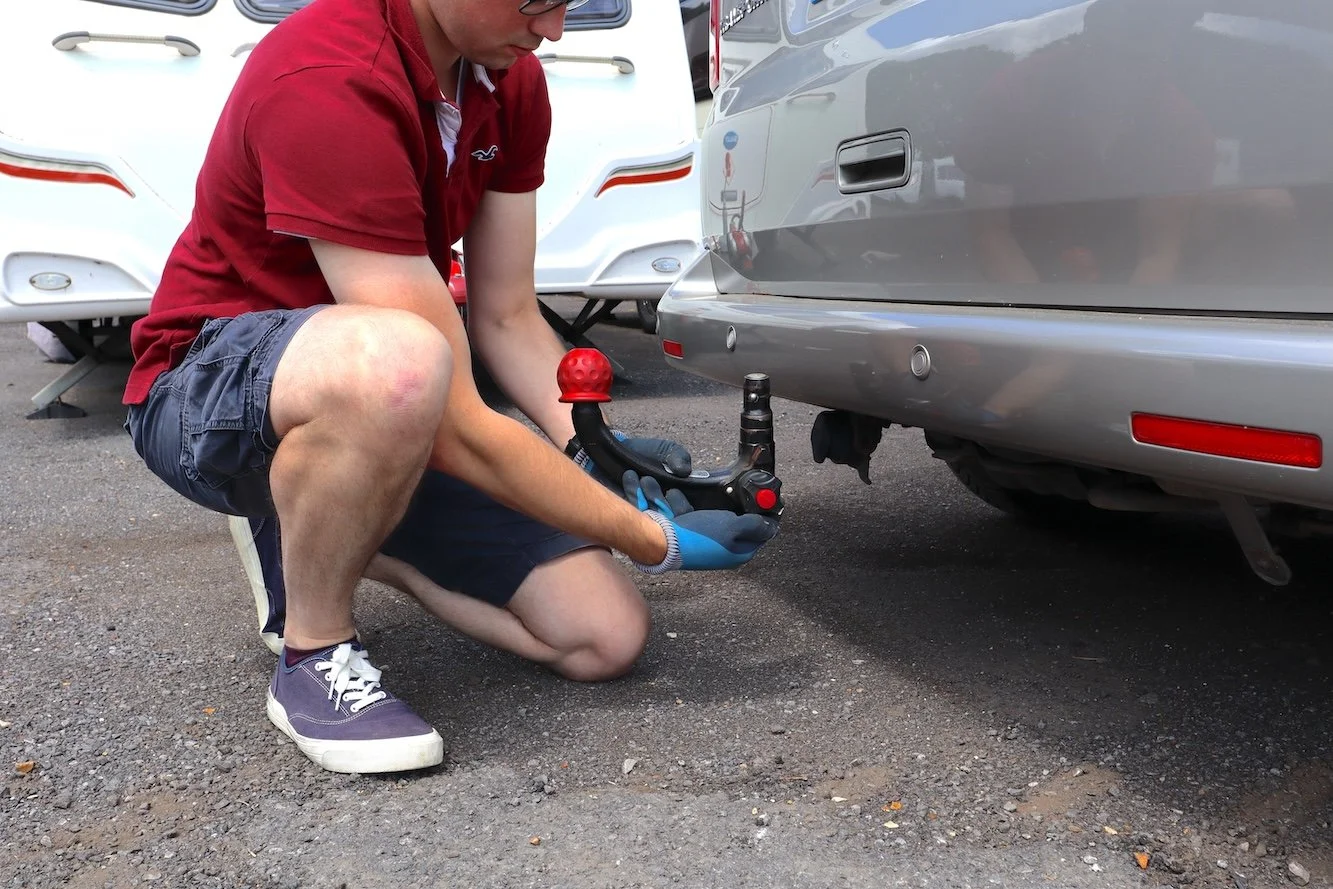
A detachable towbar is designed so that the tow ball can be removed entirely when it’s not needed. Typically, the tow ball locks into place securely when towing and is then released using a key or lever system.
For WAV users, the benefits are that a tail lift can operate normally when the vehicle isn’t needed for towing.
When installed correctly, a detachable towbar is just as strong and safe as a fixed towbar – it simply offers more flexibility.
Final Thoughts…
Towing with a wheelchair accessible vehicle is possible, but it requires the right type of adaptation. Lowered floor WAVs are not suitable, while side lift and tail lift WAVs can work extremely well when set up correctly.
Think about what your requirements are BEFORE you go out and buy a WAV, and speak to reputable wheelchair accessible vehicle converters.
Feel free to get in touch with us if you have any questions; we’ll try our best to help if we can or, at the very least, help steer you in the right direction. We’re always happy to share what we’ve learned along the way.
*Please note: There may be Amazon affiliate links within this article. It won’t cost you any extra, but should you choose to make a purchase after clicking a link then we’ll get a few pennies towards our next trip! All of our write-ups express our honest opinions, but what works for us might not work for you, so please do shop around and make sure you’re getting the best item and value for money.